
#168 - Interview
🇬🇧 The Exit from Democracy. The project shaping our world
How markets, law, and technology are reshaping sovereignty.
Écouter sur :
🇫🇷 fr



Soutenir Sismique
Sismique existe grâce à ses donateurs.
Aidez-moi à poursuivre cette enquête en toute indépendance.
How markets, law, and technology are reshaping sovereignty. With Quinn Slobodian.
Where does power really reside today?
If capitalism no longer operates within the boundaries of nation-states, what happens to democracy? Who governs a world shaped by tax havens, special economic zones, and private infrastructures? And what if some of the most influential actors are no longer trying to win political power, but to escape it altogether?
In this conversation with historian Quinn Slobodian, we explore the deeper logic behind neoliberalism, the rise of “exit” politics, and the growing fragmentation of sovereignty.
A discussion about the shifting relationship between capital and democracy, and what it means for the future of our political systems.
00:00 - Introduction to the Conversation
02:00 - Understanding Historical Contexts
05:03 - Power Dynamics in Modern Capitalism
08:09 - The Evolution of Capitalism and Political Economy
12:09 - The Role of Neoliberalism
20:59 - The Intersection of Democracy and Capitalism
30:05 - Special Economic Zones and Global Capitalism
36:32 - Capitalist Utopias and Economic Zones
39:08 - The Rise of Neoliberalism in the 1970s
44:03 - International Economic Law and Capitalist Rights
50:40 - The European Union: A Competing Vision
53:00 - Debt as Political Discipline
01:01:03 - Trumpism: A New Political Experiment
01:11:53 - Neoliberalism and Geoeconomics
01:17:07 - Understanding Empire and Power Dynamics
01:23:36 - Muskism: A New Economic Paradigm?
01:27:31 - Ecological Stress and Energy Limits
01:35:37 - The Future of Nation-States and Democracy
Reframing the lens
Neoliberalism is not just an economic doctrine, it is a political project aimed at organizing the world to shield markets from democratic interference.
The goal is not to eliminate the state, but to reshape it into a guarantor of a specific economic order.
Power does not disappear, it relocates into legal, financial, and technical architectures that are often less visible.
Shifting the locus of power
The world is no longer structured solely around nation-states, but around zones, enclaves, and regimes of exception.
Tax havens, free zones, and special jurisdictions allow actors to bypass common rules without abolishing them.
This fragmentation makes power harder to locate, and therefore harder to challenge democratically.
From “voice” to “exit”
Parts of the economic elite are no longer trying to influence political power, but to escape it.
The logic of “exit” replaces political engagement with strategic withdrawal from democratic constraints.
This shift redefines the relationship between capital, citizens, and institutions.
Expanding the boundaries of political imagination
Ideas once considered fringe, often rooted in libertarian or techno-utopian circles, are becoming concrete political projects.
Imagination plays a structuring role, narratives drawn from science fiction or world-building now inform real-world strategies.
The boundaries of what is politically conceivable are expanding faster than our ability to fully grasp their implications.
Capitalism without democracy?
A growing tension is emerging between global capitalism and democratic sovereignty.
Some projects explicitly aim to separate the two by creating spaces where political constraints no longer apply.
This raises the prospect of a future in which capitalism and democracy are no longer inherently linked.
A deeper transformation
What we are witnessing is not just another political crisis, but a structural transformation of power relations.
Traditional categories such as state, territory, and sovereignty are no longer sufficient to describe reality.
Understanding these shifts is key to regaining political agency in the contemporary world.
Rethinking the present
Current dynamics, from populism to the rise of private power and geopolitical tensions, take on new meaning through this lens.
This is not a simple regression, but a reconfiguration of capitalism at a global scale.
The central question becomes, where does power now reside, and how can it still be democratically governed?
Concepts
Neoliberalism Quinn distinguishes several meanings of the term: a historical period, a set of policies, a type of subjectivity, and an intellectual movement that emerged in the 1930s.
Mass democracy as a challenge to capitalism A recurring theme in the conversation is the fear that democratic majorities may demand redistribution, nationalization, or limits on capital.
Special economic zones These are described as spaces operating under distinct rules, often designed to reduce labor protections, taxation, or democratic oversight.
International economic law as “encasement” Rather than simple deregulation, Quinn describes globalization as the creation of legal frameworks protecting mobile capital above the nation-state.
Debt as discipline Debt appears in the episode as a way of constraining both individuals and states, shaping behavior and reducing room for political choice.
“Hard” solutions In the later mutations of neoliberal thought, Quinn points to the rise of hard borders, hard money, and hardwired views of human difference.
People
Quinn Slobodian Historian of international history at Boston University, working on global order, political thought, and neoliberalism.
Friedrich Hayek Presented as a central neoliberal thinker concerned with protecting markets in an age of mass democracy.
Milton Friedman Mentioned as a major figure in the neoliberal tradition and in Quinn’s discussion of market radicals.
Peter Thiel Cited as one of the figures associated with radical market visions and post-democratic imaginaries.
Curtis Yarvin Mentioned as a theorist linked to neo-monarchist ideas.
Balaji Srinivasan Referenced as a thinker associated with the “network state” idea.
Javier Milei Discussed as a contemporary political figure embodying some of these radical libertarian trends.
Michel Foucault Mentioned both as an influence on Quinn’s method and as the author of one of the books he recommends.
Edward O. Wilson Author of Sociobiology, recommended by Quinn at the end of the interview.
Organizations / Structures
Mont Pelerin Society Described as the postwar gathering place of neoliberal intellectuals such as Hayek, Friedman, Becker, and Mises.
World Trade Organization (WTO) Mentioned as a key institution of international economic law, later weakened and increasingly ineffective.
NAFTA Referenced as one of the legal frameworks through which corporations can challenge states.
IMF and World Bank Mentioned as part of the postwar Bretton Woods institutional order.
United Nations (UN) Discussed notably in relation to the “New International Economic Order” and postcolonial demands.
Heritage Foundation / Project 2025 Cited as a contemporary descendant of earlier neoliberal intellectual traditions.
Historical and Geopolitical Context
Collapse of the Habsburg Empire Quinn presents this as an early historical reference point for the tensions he studies across the twentieth century and beyond.
Postwar order The conversation refers to the institutional order built after 1945, including Bretton Woods and US hegemony.
Decolonization and the 1970s A key moment in the episode: rising worker unrest, postcolonial sovereignty claims, and attempts to reshape the world economy.
Hong Kong Presented as a crucial model of non-democratic capitalism and a major reference point in Quinn’s analysis of zones.
China and Shenzhen Discussed as an example of how special zones were used inside a broader state-led strategy.
United Arab Emirates / Dubai Mentioned as another successful example of zone-based, non-democratic capitalism.
European Union Discussed as an example of political authority being moved above the nation-state, with competition law playing a central role.
Books explicitly cited in the episode
Globalists: The End of Empire and the Birth of Neoliberalism — Quinn Slobodian Publisher: https://www.hup.harvard.edu/books/9780674979529
Crack-Up Capitalism — Quinn Slobodian Publisher: https://us.macmillan.com/books/9781250753890/crackupcapitalism
Hayek’s Bastards — Quinn Slobodian Publisher: https://press.princeton.edu/books/hardcover/9780691249429/hayeks-bastards
Muskism — Quinn Slobodian Publisher: https://www.penguin.co.uk/books/469248/muskism-by-slobodian-quinn/9780241743735
Sociobiology: The New Synthesis — Edward O. Wilson Publisher: https://www.hup.harvard.edu/books/9780674002357
Discipline and Punish — Michel Foucault Babelio (French edition: Surveiller et punir): https://www.babelio.com/livres/Foucault-Surveiller-et-punir/1817
1. Sociobiology: The New Synthesis — Edward O. Wilson
Why he recommends it:
A foundational book for understanding human behavior beyond pure rationality. It explores how biological and evolutionary dynamics shape social and political life.
2. Surveiller et punir (Discipline and Punish) — Michel Foucault
Why he recommends it:
A key work on how power operates through institutions, norms, and what becomes “obvious” in society.
It informs his view of the intellectual’s role: making visible what appears natural.
Concepts and analytical frameworks
Embedded vs Disembedded Markets (Karl Polanyi)
The idea that markets are always embedded in social and political structures, and that attempts to “disembed” them generate deep tensions.
https://www.babelio.com/livres/Polanyi-La-Grande-Transformation/18754
The Trilemma of Globalization (Dani Rodrik)
The argument that democracy, national sovereignty, and global economic integration cannot be fully achieved at the same time.
Legibility and State Power (James C. Scott)
How states simplify complex realities to make them governable, often with unintended consequences.
https://www.babelio.com/livres/Scott-Seeing-Like-a-State/214507
Technofeudalism (Yanis Varoufakis)
The thesis that digital platforms are reshaping capitalism into a rent-based system dominated by tech “lords.”
https://www.babelio.com/livres/Varoufakis-Technofeodalisme/1679550
Books and essays
The Sovereign Individual — James Dale Davidson & William Rees-Mogg
A foundational text for understanding libertarian visions of a post–nation-state world.
https://www.babelio.com/livres/Davidson-The-Sovereign-Individual/136418
Seeing Like a State — James C. Scott
A critique of large-scale technocratic planning and its frequent failures.
https://www.babelio.com/livres/Scott-Seeing-Like-a-State/214507
The Globalization Paradox — Dani Rodrik
An accessible analysis of the structural tensions between globalization and democracy.
The Age of Surveillance Capitalism — Shoshana Zuboff
A deep dive into how data extraction and digital platforms create new forms of economic power.
https://www.babelio.com/livres/Zuboff-The-Age-of-Surveillance-Capitalism/1196571
Articles and resources
Balaji Srinivasan — The Network State (talks and essays)
An entry point into ideas of decentralized, cloud-based governance.
Yanis Varoufakis — Articles and interviews
Ongoing reflections on the evolution of capitalism and the power of digital platforms.
Dani Rodrik — Blog and research
Regular analysis of globalization, economic policy, and political trade-offs.
Thinkers to explore
Karl Polanyi
For a historical understanding of the tensions between markets and society.
Dani Rodrik
For navigating the political dilemmas of globalization.
James C. Scott
For insights into state power, simplification, and unintended consequences.
Yanis Varoufakis
For a critical perspective on contemporary capitalism and tech power.
Shoshana Zuboff
For analyzing the role of data and platforms in shaping new power structures.
Julien Devaureix:
Hello quinn hi well thanks for offering me some of your precious time and attention because we're on january 12th today and a lot is going on in the world right now a lot of seismic waves as i like to call them and we are here basically to try to make sense uh to make sense of it all and And I know, I'm sure, you are of great help to do just that, because I believe you see a few things clearer than most of the people. So can you, just a simple question, can you please briefly introduce yourself and tell me a little bit about what you do, where you are, etc.?
Quinn Slobodian:
Sure. My name is Quinn Slobodian. I teach international history at Boston University in a school of global studies. And I began my career writing about German history, mostly, and the history of social movements, especially race and the specter of the third world and the global south in German politics after the Second World War. But then I kind of pulled the lens back, and I've been writing for the last 10 years or so about histories of global order and political thought. I just finished a trilogy of books about neoliberal thought. First one was called globalists second one was called crack up capitalism and the third one was called high x bastards and i'm sure we'll have a chance to talk a bit about those most recently i've just completed a book called muskism that tries to take seriously the political economy of elon musk and let's see three of those books either have been or will be translated into French, so they are available to the French reader as well.
Julien Devaureix:
And the latest one is being released in a couple of months, right?
Quinn Slobodian:
Muskism will be out sometime next year in French, but in English, yeah. I mean, actually, in German, it comes out already next month and then in the UK and America in March and April.
Julien Devaureix:
Yeah, German market is probably more dynamic, I guess.
Quinn Slobodian:
They need to get it ahead of the English translation or else everyone just buys it in English.
Julien Devaureix:
Okay. Okay. Yeah, maybe. Okay. We don't have that problem in France for now.
Quinn Slobodian:
More of a captured market there.
Julien Devaureix:
So, I mean, before we get into the concepts or even current events, because we're going to go through that, I'd like to understand your lenses. You know, how you think. This is a typical question that I ask to all my guests. You know, what are your lenses? When you look at the world, what are you paying attention to first? You know, what kind of structures and dynamics do you instinctively look for?
Quinn Slobodian:
Well, in German history, there's this tradition called conceptual history, where people try to understand the past through the big categories and concepts that have been used. So you try to understand when did we start thinking about the world in terms of classes, or when did we start thinking about the globe in terms of continents or hemispheres. And I think I was really indoctrinated by that in my time as a historian. So when I look at these flashpoints of geopolitics or flare-ups of violence at home or abroad, often that's the first question I ask is, what kind of categories are being deployed here? How are the actors conceptualizing their own action? What's their thought world? And is that new? Does it have a history? Is it the return of something older? So that's often the way I think I sort of tiptoe through this stuff is to say, you know, what is the mental furniture that is inside of the rooms of the minds of the actors in play?
Julien Devaureix:
So the ideas, the world of ideas, basically, and concepts, and what guide them.
Quinn Slobodian:
That's right. I mean, I think that any given situation can be explained by many perspectives. You know, there's either a direct material angle, there's a direct ideological angle, but something that's helpful for me is to think about categories where the two meet. So how does, for example, an idea of a world economy become materialized through things like infrastructure, stock markets, communication grids, so that the way that ideas become real and material and frameworks for orientation, I think, is something that's important for me. And actually, another important inspiration is a French philosopher, Michel Foucault, who worked this way as well, not simply an abstract world of ideas, but an idea of ideas kind of made flesh and made material.
Julien Devaureix:
Okay. Well, I mean, let's start by history. then because uh and that's also the angle that you use in in your books uh telling stories and telling uh telling us about history and um and anyway i think i do believe that we need to understand where we come from you know and when where current dynamics you know are rooted what is the fundamental tension around power that you've been trying to make sense um to make sense yourself across your books. You can see that this is a core element of all your books.
Quinn Slobodian:
Yeah. I mean, one of the things that it tracks through the work I've been doing that stretches from around the time of the collapse of the Habsburg Empire at the end of the First World War until the day before yesterday, is that at any given time, I think there are insurgent social movements, there are entrenched capitalist classes, and then there are a lot of what you could think of as ideological entrepreneurs kind of trying to organize the class energy and the class power towards a kind of more stable paradigm or a more stable equilibrium.
Quinn Slobodian:
And the interesting thing about looking at such a long period of time especially when you pull the lens back to include you know informal actors and new actors like the new countries of the decolonizing world is you see that everything was at play everything was open so across the 20th century into the 21st there was no inevitable march towards let's say a world of globalization and smooth trade and smooth financial transaction any more than there was an inevitable march towards a world of anarchy and completely dissolved states with competing, you know, pirates and tribes scattered across the world. There was a competition between these. And often it came down to who was able to marshal a set of kind of organizing principles and a set of organizing institutions that could reign in the inchoate forces of, human creativity and human bloodlust and human energy at any given time.
Quinn Slobodian:
And there are, as it turns out, these kind of punctuated moments across a period like the 20th century where there is more openness, more volatility, more possibilities for new kind of insurgent ideas to become dominant. And I think the goal of the historian is to sort of keep the antennae out for those moments to go back and say, where could things have gone differently? And similarly, you know, what moments matter? What is surface froth? And what is a kind of a moment of genuine challenge?
Julien Devaureix:
So, basically, we can read the story, history, as a tension between different forces, you know, trying to grasp territories, trying to grasp power. But is there a tension that you see that is specific to modern capitalism? And does it connect to much older forms of political order, you know, like empires? And, you know, what was new with the 20th century form of capitalism?
Quinn Slobodian:
Sure. Well, I mean, I think one of the downsides of the dominance recently of the narration of the whole modern period as one of a history of capitalism, as seen in works like the recent 1400-page book by the Harvard historian Sven Becker, which will probably be translated into French soon. Although he himself is keenly aware of the fact that there were always competing political economic systems, even when capitalism won, sometimes I think using capitalism as the dominant frame helps us to kind of suppress or repress all of the histories that didn't come to pass. So thinking about the 20th century, not as an era of capitalism, but as an era of many possible political economic models or outcomes is, I think, a more fruitful approach. So in the 20th century, we didn't know that capitalism was going to win. Even people who were cheerleaders of capitalism, like Joseph Schumpeter, the Austrian economist, as late as the 1950s was writing books in which he said, basically, capitalism is doomed.
Quinn Slobodian:
In fact, the very concentrations of power in the form of the modern corporation and the modern firm, the bringing in of the masses into a world of mass consumerism and mass democracy is going to make the march towards socialism inevitable. You know, sort of regrettably, he had to concede that when everybody has a vote, when everybody has a stake in the production process, and an ability to voice even workplace power, eventually, they're going to say,
Quinn Slobodian:
hey, why is all the profit going to the owners and the managers? Why shouldn't this be democratized? And that wouldn't necessarily happen through a revolution. It could happen simply through representation of workers on boards, expansion of workers' pensions as parts of firms' portfolios. And over time, you would get a kind of peaceful transition towards a non-capitalist political economic form. Obviously that didn't come to pass and i think if anything one of the guiding questions for me in the last decade or so my work is why it didn't so why is it actually that capitalism became the common horizon for political economic imagination when it was anything but determined in advance so i think you know the the conditions that we now think of as having made global capitalism.
Quinn Slobodian:
Both possible and sometimes almost inevitable include the idea of competing markets globally such that one offer in one part of the world could undercut an offer in the other. So you have this constant arbitrage possible whereby someone doesn't have to buy from this person because someone else could set up a factory one continent away and make it cheaper or set up the creation of a certain product or crop one country away and make it cheaper, thus producing a kind of a race to the bottom.
Quinn Slobodian:
But those things also, I think, global communication networks, oversight over kind of a planetary system of production and consumption were always thought of by socialists anyway, as similarly as conditions for something like a world planning apparatus or the elimination, in fact, of the profit model or the price mechanism. So I think that a lot of the violence and fervor in politics in the last 25, 30 years has actually been about people in waves realizing that, in fact, globalization doesn't only point in one direction. And a lot of the violence of the counter-reactions has been against efforts to create global political economy otherwise. So think about the pink tide of the early 21st century. In Latin America, you had a series of socialist governments doing things like nationalizing energy production, doing very wild things like giving legal rights to forests and rivers and mountains, bringing indigenous people into the political process like they never had been before.
Quinn Slobodian:
And this basically freaked out a lot of the global capitalist class, both domestically and abroad, and you had a counterreaction. And now we are in another one of those waves where efforts to create more just and equitable forms of political economy are reacted to by excessive force often
Quinn Slobodian:
backed up by the authorities abroad. In this case, the United States acting as the guarantor for more violent forms of right-wing capitalism in places like Argentina and Chile.
Julien Devaureix:
Can you go through the key cycles recently to understand this kind of fight or this tension between the states and especially democracies and liberal democracies and all the experiments of different forms? And um the private sector and the and the capital you know trying to be free trying to be profitable trying to get rid of uh all type of uh barriers you know what what are the phases and what is the stention that again like the other day you know peter peter mentioned um between between democracy and business.
Quinn Slobodian:
Yeah, I mean, even just keeping the frame on the United States for a minute, I think that the constant bombardment of sensationalistic news and events from day to day on the kind of reality TV model that is so cherished by our current president here can help us ignore real deep and serious conflicts and cracks in actually the capitalist class about how the economy should be governed. So take the most recent administration before Trump 2.0, the Biden administration.
Quinn Slobodian:
That now is seen in retrospect by people in the United States as a kind of a weak and maybe even failed administration, colored extremely by the way that it ended. So Biden's decline into senility, really, by the end of his term.
Quinn Slobodian:
Has created a retrospective feeling that the man was incompetent, basically, from the beginning. And for people on the left, the surrender to Israeli foreign policy in every one of its demands and the abandonment of international law in the regulation of the suppression of the Palestinians and Gaza has led to a kind of unwillingness to even take seriously what had happened for four years under the Biden presidency. But if you go back to 2021 at the beginning of that presidency, You will find a very different tone and a very different mood. Because, in fact, the people who came in as the economic advisors for Biden were much more left-wing than the average Democratic policy makers.
Quinn Slobodian:
They were actually more like people from the Bernie Sanders or Elizabeth Warren camp than they were from someone like the Pete Buttigieg or Amy Klobuchar camp, which were the other kind of centrists competing for the presidential nomination. And what they wanted to do was basically do a Green New Deal. So they wanted to take the mandate that had been given to them in the wake of 2020 and figure out how to realign the American manufacturing base for a few very important things. An energy transition away from fossil fuels towards electrification.
Quinn Slobodian:
A re-industrialization of the American economy, not building fossil fuel-driven cars anymore, but building solar panels, building windmills, building electric vehicles, building electric buses. And they wanted to bring back something more like a European-style care economy with more workers' rights, more attention to things like daycare prices and affordability.
Quinn Slobodian:
For what they imagined as this new green working class. It was a really, really enormous and well thought through vision, actually, of how capitalism should look different, should look more like social democracy, should look nothing like the fossil fuel dependent model that had dominated the 20th century. So it was a grandiose plan, whether or not it was actually ever workable is
Quinn Slobodian:
a question for another day. But what was striking right away is that it ran into basically the buzzsaw of democratic opposition. So it was doubters within the Democratic Party who put the brakes on this transformative project, who vetoed key parts of it. Namely, you have these two names, Joe Manchin and Kyrsten Sinema, very specific politicians who prevented the passage of bills that would have allowed for a more full version of this transformative green industrial policy agenda from being driven through. What you got instead was very watered down. By the time that Biden was leaving office, there wasn't time for the big semiconductor plants to be completed, the big solar panel factories to be completed. So people just had a sense of half-finished projects, they associated post-COVID inflation somehow with Bidenomics, and it now looks like a kind of.
Quinn Slobodian:
A halfway failed intervention. And yet the difference between, I think, the difference between what was being attempted there and what is being done now under the current administration is actually enormous, right? It's not trivial, actually. And so for, I think, opinion creators and opinion makers, molders, those of us who speak in the public, what's interesting is to try to watch these key figures in the capitalist class and ask how they are making their decisions. So why do the asset managers at BlackRock or State Street who are managing huge, huge, huge pension funds, for example, huge investment funds, agree with the green industrial policy one day and then two years later decide that everything about environmental goals is disposable and go run right back into it.
Quinn Slobodian:
Oil and drilling? Why do the monster figures of Silicon Valley feel comfortable supporting Democrats one day and then change their stripes and become ever more reactionary the next? Are these political processes that are independent of underlying material incentives, or are they just the reflection of a constant seat for accumulation and profitability? I think that is you know a kind of life and death question actually in the united states right now is whether or not um the people in power are open to persuasion or will simply always follow the bottom line regardless but.
Julien Devaureix:
You you see that through through history right and this is what you describe uh so well you know starting with the australian empire empire you know it was already trying to, uh, to combinate a strong state with, uh, an open market, you see that through colonialism, you see that tension, you know, after the, the second world war and, uh, and then with the emergence of, um, of neoliberalism, you know, with, uh, with the key figures with Reagan and Thatcher. How would you describe what is common through that history? And getting back to my question, what are the key notes? What are the key facts that people need to understand to understand where we are now? And we didn't talk about neoliberalism, which is not capitalism, but which is a way of thinking, a way of trying to be distanced from too many rules, from a strong state. Can you explain that dynamic that defines basically the last 40 years, especially?
Quinn Slobodian:
Sure. Yeah, I mean, I'll answer the question about neoliberalism first, because it is something I've thought a lot about, and I think it is often poorly understood, to be honest. So...
Quinn Slobodian:
It's poorly understood because it's used in different and sometimes contradictory ways by academics even, by certainly activists and in the kind of public sphere. So I think there's basically four ways that neoliberalism is used. One is as a kind of a period of time. So people will say, we are in the neoliberal era or we have left the neoliberal era. And there, there's some debate about when it began. Is it at the beginning of the Reagan and Thatcher moment? Is it already with the departure from the gold standard that led to a world of floating exchange rates? Is it actually later with the creation of things like the World Trade Organization in the 1990s? And then conversely, when does it end? Is it over now? Did it end in 2016? Did it end in 2020, etc.? The other way it gets used is to describe a set of policy proposals, so a kind of laundry list of measures, so privatization, deregulation, liberalization, such that you can look at one country or another and say it's more or less neoliberal. So you say, oh, Holland is more neoliberal than Poland because X, Y, and Z.
Quinn Slobodian:
The third way it gets used, I think, is more generally as a kind of form of subjectivity or self-understanding. So people will sort of, if they spend a lot of time promoting their own brand or identity online or, you know, in their interactions with other people to build up a sort of entrepreneurial identity, then they might think of themselves as acting in a neoliberal way. So people might say, wow, everything is so neoliberal now, all of the stars are constantly selling their self-image, and we now are emulating them in everyday life, part of prediction markets, betting markets, everything is filtered through marketization, as it's sometimes described.
Quinn Slobodian:
The fourth way though is to describe it as a kind of intellectual movement so there are people who have described themselves as neoliberals it's not common but as i describe in my books and others have as well the term itself comes out of a very specific moment which was 1938 in paris and the gathering of liberals in the European sense, so free market believing anti-socialists, who believed that in the 1930s they were basically faced by two threats. They had socialists and communists on the left, and they had fascists and authoritarians on the right. And they felt like those who believed in free markets and even individual freedoms were in a minority in a time of, you know, the popular front on the one hand, and then the Nazis and the communists elsewhere. So they wanted to sort of keep the flame of liberalism, but they realized that in an era of mass democracy, you couldn't just have a small so-called night watchman state anymore with a few regulations and just protecting contract and protecting the border, being for the military. But you needed to have a more proactive state to protect free markets. So that basic contradiction was already built in. You actually needed strong state and free markets.
Quinn Slobodian:
Not a small state, but one whose very intention was to make sure that there were more markets and to make sure that laws were designed in a way to have certain outcomes and not others. So outcomes that protected private property, outcomes that protected free market exchange. So in the 1930s, they come together, call themselves neoliberals. They kind of stop calling themselves that. But after the Second World War, they reform in something called the Mont Pelerin Society. After the place where they met in Switzerland for the first time. And they act as a kind of ideological advising class, and people like Friedrich Hayek, people like Milton Friedman, people like Gary Becker, Ludwig von Mises all gather and discuss ideas in these meetings. And it goes up to the present, such that the so-called Project 2025 document that was much discussed in the United States, created by the Heritage Foundation think tank here in the US, is a kind of direct descendant of these neoliberal intellectuals who continue to ask what conditions are necessary to protect capitalism under its constant threat by mass democracy.
Quinn Slobodian:
So that's the way that I think about what neoliberalism is. And if you think about it that way, what you discover is that it changes a lot over time because the enemies of neoliberalism change a lot over time.
Quinn Slobodian:
So in the 19, and this is then to get to your question of like, where are certain key rupture points? In the 1930s, the main threat might have been the socialists or the fascists. In the 1950s the fascists are basically defeated and the new threats are now the keynesians and the social democrats who are slowly preaching this kind of gradual socialization that they fear the neoliberals fear is going to lead in the end on what fridger kayak famously called a road to serfdom in the 1960s the era of decolonization the fear is socialist forces from the global south taking over the united nations and normalizing uh a move away from competition up into the 1990s and this is the subject of the hayek's bastards book that um will be out yeah in in in winter or or early next year in french by the 1990s the fear is something different by neoliberals they're starting to get worried about environmentalism they're worried about They're worried about feminism. They're worried about anti-racism. They're worried about immigrant rights. They're worried about rights for disability, the disabled. All of these now seem like the primary enemies of the market. Because...
Quinn Slobodian:
Women's rights organizations come in and say, we need quotas, we need equal representation on corporate boards. Environmental groups come in and say, we need to be testing these products constantly, keep the emission standards up. And all of this is slowing down as they see it, you know, the speed of competition that is necessary to reach maximum efficiency in the capitalist system. So what happens then? If you're a neoliberal, you say, my primary interest is I want economic freedom. I want the efficiency of the system. The main people who are getting in the way are these feminists, these anti-racists, these people who are pushing gay rights, disabled rights. So who else hates these people? Well, these people on the far right hate these people for different reasons. Maybe they hate immigrants because they feel that they're diluting the purity of the race or changing the demographics and so on. And so they create alliances with them. And so this is a situation where if you follow the ideas, things that seem strange suddenly seem not so strange. So why would someone who cares mostly about economic freedom suddenly be teaming up with someone who wants to bring back the old South or thinks that Martin Luther King was a gay communist? Well, because they had a common enemy. They both fear that these leftists now in the guise of green instead of red are the...
Julien Devaureix:
We're going to back to that, to what's happening right now. I want to stay a little bit with what happened and what you can help us decode. Basically, it's interesting because you talk about the fear that they have. But when I hear you, it's the fear of being limited in doing business and also in accumulating capital. They talk a lot about the fear of losing freedom, but what this is, what I understand is this idea is that I can be as powerful and as rich as I can. This is the main fear, correct? Or is there something else that is more profound than that?
Quinn Slobodian:
Yeah, I mean, I think that if you take either kind of an understanding of capitalism from the kind of Marxist tradition, or you take it from the tradition of liberalism, in both cases, I think you would see that there's a kind of imperative for the business person or for the capitalist that is driven exactly as you say, towards sort of accumulation and which is by nature opposed to obstacles to that accumulation. The whole argument for something like the welfare state or even workers' rights.
Quinn Slobodian:
Is that by conceding some power, in the end, the capitalist actually gains more. I mean, this is the argument for Fordism. It's why, arguably, someone like Henry Ford is willing to give rights to the workers because by doing so, you get labor peace, you get consistent production processes in the factory, and then you get consumers for your automobiles because then they themselves get bought and absorbed into the system as consenting actors instead of coerced actors. So I think that is otherwise described as a process of creating hegemony, that is domination with consent, not domination without consent. And that, I think, is always, we don't need to remain only in the capitalist era, but that is always the goal of a system of government or power is to figure out how to manufacture and secure legitimacy with the governed population in a way that doesn't disrupt the existing hierarchies of power.
Julien Devaureix:
Yeah, and so there is this constant battle with the states and with the government in place to try to maintain that certain level of freedom.
Julien Devaureix:
And I want to go through that to understand how the system actually works. At what point does governing capitalism become less about winning democratic battles and more about designing constraints that keep certain decisions out of democratic reach you know this is and and there are two main things that you are that you talk about one is the the creation of special economic zones and the other one is uh kind of the rules that exist international rules that exist above the national laws. Maybe we can start with the first one. Because I find it very, very interesting in your crackdown capitalism. Can you tell us about, and I think it's not well understood by most people, the fact that we think that there is this international economy that exists, but we forget about all the little holes that are in the system. Can you tell us about these zones when they started, the idea, etc.?
Quinn Slobodian:
So, yeah, I think that's one of the reasons why it's useful to think about democracy as a foundational challenge to the smooth functioning of capitalism and the primary enemy, really, of what we can call neoliberalism. Because when given votes, when given democratic voice, populations often come to decisions that might be adverse to the desires and the bottom lines of the people who own the means of production, who own the factories, and so on. The popularity of communist parties, even in places like post-war France.
Quinn Slobodian:
Suggests that if you have a genuine competition between a battle of ideas that plays out inside the democratic space, then you have a pretty serious and constant threat of a kind of axe over your head should this or that election go the wrong way, right? I mean, this is also the story of Latin America where capitalists there feel like they live under a constant threat of the next election swinging to the left, and then they face expropriation. They feel the need to flee the country, etc., sell off their goods at fire sale prices, or be expropriated or nationalized by the government. So that's not a simply imaginary fear on the part of capitalists in the 20th century. It's become much less common now, you know partially for reasons we're about to talk about but across the 20th century it wasn't that rare actually for people who own mines for people who own factories to suddenly be told the laws just changed you don't own that anymore it's now the property of the government it's the property of the people. One of the ways to think about neoliberalism is how to create a world where things like that can't happen ever again, how you can stop the power of democracy from overrunning the power of private property.
Quinn Slobodian:
And as I described it in two books, it basically takes two approaches, and they differ by the scale at which they happen. One of them is about going underneath the envelope of the democratic nation. The other is about going over top of it. The one that goes underneath can be captured well by this history of what you alluded to, which is really the history of special economic zones, broadly described. So what are these things, and where did they start?
Quinn Slobodian:
They start out in the 1950s and 60s as little islands often surrounded by barbed wires in places like Puerto Rico, in places like Taiwan, in places like the Philippines, where American companies usually are doing part of their manufacturing overseas under conditions that are in the United States. Outside of the threat of worker action, outside the threat of, often, legal oversight, and can be done basically much, much cheaper and much, much more frictionlessly than they would be done if they were inside of the country. So they're little islands of capitalist utopias, basically, and they are made possible by new changes by the 1960s of things like container ships that can much more cheaply move manufactured goods and products around the world without major cost. Watching these things, these small economic zones, became kind of an inspiration for neoliberal thinkers and policymakers in the 1970s.
Quinn Slobodian:
Especially. Why the 1970s? Because that was a decade of great worker agitation. It was a decade of a lot of strikes, a lot of wildcat strikes even, you know, unauthorized, non-union organized strikes, and a sense of resurgent national self-determination and searches for autonomy, especially in the decolonizing world. So in the 1970s, it's not well remembered, but there was something that was called the New International Economic Order that was passed by a majority in the United Nations, which called for basically a more just and equal world economic arrangement, which would require vast transfers of wealth from the global north to the global south, And recognition of the rights of new nations and poor nations to have priority over the resources within their own borders. So something also called the permanent sovereignty over natural resources was part of that push. And it was basically a major threat, you know.
Quinn Slobodian:
Full alarm bells ringing for global capitalists everywhere. Like, oh, no, here comes that long feared, you know, universal front against capital ownership in the North as it was globalizing at the time. So what do you do? I mean, one thing you do is you push back against it. But the other thing you do is you find ways to avoid it and escape the oversight of newly decolonizing nations.
Julien Devaureix:
And you look at Hong Kong.
Quinn Slobodian:
This is enter Hong Kong. So the book Crack Up Capitalism, which was called Capitalism of the Apocalypse much more dramatically in French, begins and ends in Hong Kong. Because Hong Kong in the late 1970s was a strange place. It was still a colony in a time when most colonies had experienced wars of independence or transitions into self-determination. It was extremely small, and yet by relative standards, extremely wealthy. So this rocky island in Southeast Asia had become a global center for financial transactions, for manufacturing, for trade. And one of the ways it had been able to do that was by suppressing democracy altogether.
Quinn Slobodian:
So there was no one-person, one-vote model in Hong Kong. There was no prospect of introducing it. It was run more like a corporation. The financial secretary was more important than the governor of the island and the associated territories. And for people like Milton Friedman and neoliberals, it was very inspiring. So late 1970s they really start to say how can we make many hong kongs globally in a time of decolonization and growing leftist sentiment in the global south well we can do it through the model of these special economic zones and we can start doing it not in far-flung places like Puerto Rico or the Maldives or.
Quinn Slobodian:
Taiwan but right in the middle of New York City right in the middle of London, and you know right in the middle of the industrial heartland itself, So they start creating these things, urban enterprise zones, free ports, in British cities, in American cities. And these become places where the normal laws of democratic oversight are suspended.
Julien Devaureix:
And in China, interestingly.
Quinn Slobodian:
Absolutely. I mean, the place where it actually works is China.
Quinn Slobodian:
The place where it doesn't really work is London and the United States. If you are following the British economic policy, you'll see that this is all they have still is the idea of creating free ports. And most recently, they've been called AI growth zones. And to date, they don't amount to very much. So the place where the special economic zone actually did work was a couple of places that are very notable to mention briefly. One is China, absolutely.
Quinn Slobodian:
Shenzhen, right next to Hong Kong. becomes a place that is literally fenced off and treated almost as a different country inside of China at first. You have to cross a border to enter it. Once you enter it, the rules were totally different. You had free wage labor, you had free property ownership, you had free foreign investment, and that led to an enormous economic boom. And what China did was then control the process across the territory of China by opening up these small little areas that money could rush into, uh, mobile labor could rush into, lose all of their social protections once they enter, but then have the possibility of making a great deal of money once they did. And that was the kind of slow perforations model that allowed China to become really the liberalized, um, behemoth that it is, that it is today. Another place just worth briefly mentioning is the United Arab Emirates. So Dubai in particular. Yeah.
Quinn Slobodian:
Also very adept at using this model of non-democratic capitalism, designing laws bespoke so they fit the needs of manufacturers, they fit the need of broadcasters, they fit the need of universities abroad. The Louvre, of course, has an outpost in Abu Dhabi. Why? Because they made an art zone for it. So we think about sometimes the big history of the 20th century is a move from a world of empires to nations and slowly intensifying, expanding democracy. But in fact, the most successful places have been these micro territories that practice forms of non-democratic capitalism that can then be emulated and copy pasted in different places from Singapore to Brazil and outwards and onwards. So that was one of the solutions to the problem of mass democracy and how it might run up against the imperatives of capitalist accumulation, is you go underneath the skin of the nation and you create zones.
Julien Devaureix:
How many zones are there? Like 5,000 or something like that?
Quinn Slobodian:
There's well over 5,000, yeah. And they come in all sort of forms and shapes. Some of them are as large as almost the entire Russian Arctic is a special economic zone. but then others are as small as a warehouse or um.
Julien Devaureix:
And of course they have been very successful economically and uh because no rights for workers because you import immigrants with no rights because uh you know many many reasons it's like the ideal place you know when you want to make money quickly without any uh any barriers and it's uh and it's becoming i guess a model for a lot of thinkers today and we will go back to that but there is the other ways that you were mentioning of going um which is going to both Can you talk through that?
Quinn Slobodian:
So that, if the one story about going below the skin of the nation is about the story of zones, the one going above is the history of what I call international economic law as encasement. So we think of, or we often hear the period of the last 50 years as a time of markets being liberated or markets set free into a global space. But that, I think, is a very bad metaphor because it gives us a false impression of globalization as a process of undoing regulations and laws so that money and goods are simply free to move about as they like. It's not true at all, actually. The last 50 years has been a time of.
Quinn Slobodian:
Tens of thousands of new regulations and agreements saying exactly how you're allowed to move money and goods around the world and exactly the rights that capital has when it does so. So if it gets, you know, expropriated or taken away at the one end of the investment cycle, then you have a bunch of rules and laws saying you can sue in this third party court. Here are your rights. Here are the obligations of the host country and so on. So we need to first think of the period of globalization as one of a proliferation of new forms of law and regulation, not one of liberation and deregulation. That being said, much of the flow of the creation of legal instruments above the nation, often through either multilateral or bilateral treaties that nations then sign and thus give away part of their sovereignty in exchange for certain kinds of access and safety for their own investments have been designed to privilege the rights of those with mobile capital and mobile finance over the rights of the residents who often have less of those things.
Quinn Slobodian:
So the principle of international economic law that has been made harder and harder over the last 70 years since the end of the Second World War has been to increase the right of corporations over the rights of states and the rights of private mobile capital over the rights of citizens, really.
Quinn Slobodian:
So now, in many cases, a company that has invested in a country has, in many ways, more rights and more legal standing than a citizen of that country because, to give concrete examples.
Quinn Slobodian:
If a mining company builds a mine in a country and then the country has a new government that says we don't want to have that kind of extractive industry anymore, the mining company can literally sue the country in third-party courts or bring a suit to the World Trade Organization or to NAFTA in North America and make the country compensate them for lost profits. So this was a way of constraining democracy and putting hard limits on what democratic governments could actually achieve, right? If you can only achieve up to a point in which you start to make life uncomfortable for capitalists, and if you go beyond that, then you'll be taken to a world court, then it's not really full self-determination. It's not really full sovereignty. and that is something that has been uncomfortable for people across different parts of the political spectrum for some time now right the world trade organization was only created in 1995 and already in 1999 here in the united states there was huge protests in seattle against a ministerial conference and since then it's basically been uh hobbled it has not completed a successful trading round.
Quinn Slobodian:
And now, in fact, already the WTO is impotent. It does not have enough judges to fill its appeal board. So if a country doesn't like a judgment of the WTO, they simply appeal it and then nothing happens at all.
Quinn Slobodian:
Obviously, the current American administration is very antagonistic towards the kind of.
Quinn Slobodian:
Yep. Sorry, I lost the... I got a pop-up that says the video wasn't working for us there, but I'm back. The current administration is very antagonistic to this kind of international economic law, refuses to be bound by its parameters itself. And as a result of that, without American support, that version of global international economic law that sits over tops of nations
Quinn Slobodian:
is now simply being used as another form of unilateralism for the United States. And it's not really available for less powerful nations.
Julien Devaureix:
Well, you've got, you can mention briefly also, the EU, you know, as a project to build rules for the market, you know, above the nation states.
Quinn Slobodian:
Yeah, the European Union is a great example of what I was saying before, which is that any given political economic model is somehow the artifact of struggles between competing ideas of what institutions should guard and oversee people's lives and people's actions. So since its creation in the 1950s, and I described this in globalists, there have been different ideas of what the European then community, later union should be. And one of them was certainly one that was defined by the so-called four freedoms in which you basically have competition in a single market but of course as we know there were other visions from the common agricultural policy to things like the harmonization of working conditions to the kind of solidarity transfers that so what Europe should be has always kind of been up in the air. But certainly, once we get to the 2000s, there is the increasing dominance of an idea of taking power out of the hands of elected governments, and certainly out of citizens when they make the wrong vote during a referendum, for example, and putting it into the hands of, you know.
Quinn Slobodian:
Indeed, unelected appointed commissioners in places like Brussels, often with a primary goal of accelerating moves towards market efficiency and undercutting, in fact, national decision making. So the interesting thing to me, especially as a historian of this stuff, is the way something like competition law and the Commission for Competition, which was... A very neoliberal sort of stronghold for decades was really built to stop countries from supporting their own national champions or doing state aid is now in recent years been turned into a kind of green industrial policy shop. And competition now is not understood in terms of creating a common market internally as much as making sure that Europe can compete with other major economic actors abroad. So that's a good example, I think, even there, where nowadays the things that are being done in the name of competition law would be scandalous,
Quinn Slobodian:
actually, to neoliberals of an earlier era.
Julien Devaureix:
Okay. Interesting. And can you talk also about the debt, debt in general, as discipline? Because that's another recurring mechanism on your work that's coming back. How does debt function as a form of political discipline over states?
Quinn Slobodian:
Well, I mean, I think you can look at this either within nations and then between nations, but within nations in the United States, it's extraordinary how many of the things that might be expected from the government or from a kind of welfare state are internalized to the responsibility of families themselves. So, sometimes people call this a kind of privatized Keynesianism so that you can't expect to get a higher education paid for by the government. So, instead you need to burden yourself and then your parents need to burden themselves with debt to pay for something like your education, which then...
Quinn Slobodian:
Puts a kind of burden on the outcome of that education for something that has the best return on investment. So it has a kind of disciplining effect on anyone who enters college or university, which is most people in the United States, to make sure that they are guided by a more like economistic logic, you know, don't waste your money, make sure you can pay back your debts. And in the United States, strikingly, you can't default on your student loans. So any corporation or any sort of entity that someone like Donald Trump has been part of across his checkered business career has been able to profit from very generous forms of corporate bankruptcy in the United States. In the United States, it's considered actually fine to go bankrupt because you can then fail and fail again, as they say. And you're allowed to write off things and very generous tax policies so that you can move on to the next venture.
Quinn Slobodian:
If you're a student who's gone to university and taken on debt and are unable to pay it back, you don't have that option. So you're permanently scarred by it. So that's one example, I think, internally where debt sort of guides people's life choices. Between nations, yeah, clearly the moment of the 1970s is again important because there was a brief moment where debt markets were open to poorer countries and they rushed into them. But then with interest rates flying up in the 1980s, there was a vice grip put on two countries where the IMF then came in as the kind of debt collector and told countries to restructure their economies in ways that would pay back their debts. And suddenly the kind of blue sky dreams of postcolonial independence were reigned in very seriously. And that's where we remain today.
Julien Devaureix:
Okay. Well, I mean, we've been talking about mechanisms designed to stabilize capitalism by insulating part of it from democracies. But in your more recent work, it feels like something changes. Like the project really no longer aims only at stability. There's something else. And this is in IxBastards. You argue that neoliberalism
Julien Devaureix:
doesn't simply persist after the Cold War. It really changes. It mutates. Can you explain what changes in its underlying logic and what stops working in the earlier neoliberal strategy that provoked it?
Quinn Slobodian:
But yeah, I mean, it's a very interesting moment, in fact, because you would think that once capitalism prevails after the end of the Cold War and communism as a world force is basically extinct, with some very isolated exceptions in Cuba, North Korea, China nominally still communist, but really not at all in practice. You would think this would lead to a period of kind of calm, really, or like, you know, convergence around a common political economic worldview, and at least a kind of a period of relative equilibrium. What's so striking about the people that I write about in Hayek's Bastards is how paranoid they were and how unwilling they were to live with an era of apparent economic peace.
Quinn Slobodian:
I've already mentioned the way that immediately after the Cold War, some neoliberal and conservative intellectuals became very concerned about what they saw as the new enemies. So the new actors who were coming along and were trying to disrupt the smooth functioning of the system with their special interest demands, their identity-based demands, whether on race, gender, or disability, gender, orientation terms.
Quinn Slobodian:
Um more interestingly for me is the fear of people like charles murray that i describe in the book, which is not so much a fear of these spoilers at the party who might come and uh demand too much in ways that make things difficult for everyone but he really starts worrying about what happens if they actually succeed. So what happens if the welfare state, as it exists, and in fact, it does exist in the United States, right? People, I think, especially Europeans, underestimate how important things like social security are, actually. How important things like Medicare and Medicaid. There is state-provided health insurance for good chunks of this country. People who are too poor to pay for it themselves, people who are old, et cetera. Veterans, Especially someone like Charles Murray asks, you know, what happens if this stuff actually does go away, right? What happens if the welfare state is actually defeated?
Quinn Slobodian:
Um, what will become of all of these people who have become dependents on its survival infrastructures now for decades, since at least the 1960s, uh, are they going to simply die off? Are they going to be angry? Are they going to form kind of, you know, vigilante armies demanding their welfare back? Like there's really genuine questions that people were asking in the 1990s. What happens if we win? What happens if the hardcore neoliberals actually win?
Quinn Slobodian:
And that question is one of the things that leads them to make some of these curious alliances that I already alluded to. So basically, they think, all right, if the connective tissue of the federal state is going to get thinner and thinner, and maybe if we succeed, we'll actually wipe out most of the agencies of the federal government, the Department of Education, the Department of Energy, all these kind of things, health and human services, everything will go back to the states. And then maybe even they go back to a lower level, to counties and communities. We are going to have to think about a kind of more fortified, militarized world in which there is a kind of a zero-sum competition between the American population, even amongst itself.
Quinn Slobodian:
And this will require forms of group identity that create solidarity that are not only national. So just being an American will not be enough anymore. You will need to be a certain kind. So this is the roots of things that get called Christian nationalism, especially the idea of a decentralized form of political organization in this country. And this may involve forms of affiliation based, yes, on affiliation. Religion, but also on race, also on regional identity. And this is a vision of a kind of post-modern, I would say, capitalism, because it's not about a dream of growth within the space of the nation, which has dominated the modern period in the 20th century anyway, but something that's subnational and something that might actually not be able to guarantee the same kind of growth than it did before.
Julien Devaureix:
Is it what you call the hard solutions, like hard borders, hard money, hardwired human differences?
Quinn Slobodian:
Yeah, exactly. So.
Quinn Slobodian:
So if you think that, you know, the poison is already too deep inside the veins, so to speak, of the American system for it to survive much longer, then you need to have radical solutions. And one is, yeah, you seal yourself off through hard border policy. The other is you start to, you break with the idea of someone like Martin Luther King Jr., right, that, you know, the content of a person is in their character, not in their skin color. And you say, no, it is their skin color. No, it is the things that are kind of inherent to their DNA at birth. And then you start to say, we don't trust fiat currency even, or just like the dollar itself. It needs to be harder. It needs to be gold. Or if you're a kind of crypto person, it needs to be, you know, Bitcoin or Ethereum or something else.
Quinn Slobodian:
So this paranoia at the moment of apparent success is, I think, part of the essential mood music these days in the capitalist class in the United States, which we need to kind of understand to know what is happening here, because otherwise it's quite confusing, right? I mean, it's not clear that America is best served by making such radical actions at this moment, if it has just the medium term well-being of its economy and its population in mind. There seems to be a lot of apparent self-harm that's happening to parents.
Quinn Slobodian:
Global institutional arrangements, ways of managing risk inside of the country, ways of stewarding resources. There seem to be a lot of emergency bells being pulled all at once in a way that is confusing, I think, unless you sort of get inside of the psyche of some of these people since the end of the Cold War.
Julien Devaureix:
Yeah we can do that you know because it's not just about maintaining free market and capitalism and making money as you said there's something more profound that that's influencing it and that's related to the the mind of these people you mentioned you know like the fact that increasingly inequality gets framed as natural scientific or inevitable you know rather than something that is political. Can you explain to me how much this is important to understand what's going on currently and what is led by people like Curtis Yarvin or even Elon Musk now? Yeah, just to understand their framework.
Quinn Slobodian:
Yeah, I mean, it is quite fascinating, I think, especially if you look at this from a historical perspective, because.
Quinn Slobodian:
Take the moment right after the end of the Second World War. The United States is responsible for like 50% of world manufacturing production at that point. Arguably, there's never been a moment in world history, except for maybe back to the Roman Empire, where one power was this disproportionately strong. Military terms, economic terms, financial terms. Amazing moment of unipolar power and hegemony um what does america do well they create a set of institutional arrangements that make sense to complement their overwhelming power right it actually was wise and also sensible to not immediately annex the entire world even though Probably they could have at that moment if they wanted to, but instead to say, no, we create a global form of global governance over top of that through the United Nations system, through the Bretton Woods system, as it was called, of the IMF and the World Bank, that will help rearrange world affairs in ways that are most profitable for us. We will have problems, the Soviet Union most notably, but economically, the Soviet Union was never a real competitor to the United States.
Quinn Slobodian:
Militarily. There was the problem of the bomb, certainly. But other than that, there was a kind of rationality, I think, to the way that America helped engineer the world to its own benefit at that point. I think that the panic that we're seeing now is a real lack of consensus about what form global institutions would best serve America's current, predicament, because America is no longer the America it was in 1945, right? Partially because of its policy decisions, it helped cultivate economic competitors that were very serious and very credible rivals to it in many sectors, right? Japan, Germany began to create consumer goods.
Quinn Slobodian:
Automobiles electronics steel in ways that now america had to fight with by a lot opening up china welcoming it into the world economic system as they did in the 1990s and 2000s they created, a more serious rival than they have ever had actually in the 20th and 21st century and now they don't know really what to do they don't know how they should um arrange the world system in a way that's most advantageous to them. And when they try to, through unilateral action, for example, the use of sanctions, which is very important and I think under-discussed form of American statecraft in the last 20 years, it doesn't always have the effects that they want, right? They tried to isolate Russia from the world system after the invasion of Ukraine. It kind of didn't work, right? Russia found economic partners. It had prepared for this in advance. So they're like, okay, well, that has gone out of our arsenal, kind of. What's next? And eventually, you end up in the situation we're in now, which is, well, some kind of a withdrawal to a regional hemispheric hegemony,
Quinn Slobodian:
as with the new rebooted Monroe Doctrine. Maybe that is actually the best that America can hope for, and it's no longer able to play the role of global hegemon that it was because the material foundation for that no longer exists.
Quinn Slobodian:
It's getting wrapped into so many other motivations that it's hard to kind of see rationality at the heart of this. But I think what we're witnessing is this kind of panicky scramble for a kind of a mandate in a moment of post-unipolarity.
Julien Devaureix:
What's interesting also is that we you explained these um these ideas of uh breaking up with uh with the constraints of the state now it seems that the strategy has changed and that some people realize that it was easier to take over a state than to try to build a new one to escape it and this is what i believe we're seeing in the in in the us and we can talk about china also if it's if it's relevant, because it's a very different way of doing it. But I want to talk about this, you know, because there's a lot going on, obviously, and since Trump came back, it's materialized very quickly. When you look at Trump and Trumpism through these lenses, what kind of political experiment do you see? Breaking away from neoliberalism and building something else? Or is it one of its possible outcomes? How do you analyze the situation?
Quinn Slobodian:
Yeah, well, I think my thinking has changed as events have changed. So in the first Trump administration, I didn't find it that hard to see it as a kind of a mutated form of neoliberalism. So even trade policy, which was breaking with the multilateralism of the WTO and of NAFTA superficially, was still about global competition and competitiveness. So I think you could see tariff policy in the first Trump administration as a kind of a version of what Ronald Reagan had done. You know, got tough with the Japanese, made them open up their market to more American products, limited the number of Japanese cars that could be imported, but ultimately towards a goal of American entry into foreign markets and more competitiveness abroad.
Quinn Slobodian:
The idea at the time, which was pretty common to hear from 2016 to 2020, that we were seeing kind of deglobalization or decoupling or delinking seemed not borne out by facts to me. It seemed like volume of trade was going up. China's goods were actually increasing in number in the United States. So that was a bit of a misunderstanding, I think, of that moment. And then domestically, it looked like quite orthodox neoliberal policy, right? Tax cuts for the wealthy, opening up of federal lands for exploratory drilling, cutting back on funding for things that had social justice goals.
Quinn Slobodian:
This time around, there is still part of that, right? The big, beautiful bill was noticeable mostly for its tax cuts for the very wealthy and for corporations. So we still have that element that is consistent that I think we can still say is a longstanding neoliberal style demand. But we have now, I think, advanced further towards something more like what was previously called delinking, decoupling. So the extent of export controls, the extent of the tariffing of specific products seems to now, for one faction of the administration, express a desire to create something like a more self-contained manufacturing unit that we call the United States. And it's really the United States that especially for matters of.
Quinn Slobodian:
Military equipment, now there is the demand that sort of every last thing be built in this country or under direct control of the nation, which is very inconsistent with any version of neoliberal thought that I've ever researched.
Quinn Slobodian:
Because at the most basic level, neoliberals believe in the need for an international division of labor and the principle of comparative advantage, which has been argued for for almost 200 years which is that some parts of the world do some things better than others and it makes sense to have a free exchange monetized exchange between them to take advantage of that diversity yeah yeah exactly so if you're if you're post ricardo which someone like peter navarro um one of the top trade advisors for trump is i literally saw him give a talk at harvard kennedy school called ricardo is dead um then you are probably not uh operating under neoliberal rationality anymore okay and you are working with a new kind of geo-economic framework um that has been called neo-mercantilist for example that um massively downplays the idea of efficiency gains through finding diverse partners and massively elevates the importance of national security as the most important Trump card.
Julien Devaureix:
But there are other elements to that. You can argue whether it's still the same framework when it comes to defending neoliberalism, but you can also see some people talk about the return of empires or even colonialism in a way. Or some people talk about the idea that it's all about taking all the money.
Julien Devaureix:
Taking all what's left when it comes to public, you know, to what the state owns and making it private. And you've got, interestingly, you've got examples because like NASA is almost, you know, non-existent when it comes to space now. When you have SpaceX, which is a private company that is now launching all the people and the satellites in the space for the US. You have so it looks like a little bit of a looting some of what's left from the space i want to understand you know what's the what's the idol yeah what's the ideology sorry my my my my muscles are not used that much in english but what's the ideology behind that that uh that can really help us understanding that chaos because sometimes we say it's uh trump is all about being unpredictable but actually he does a lot of what he says you see my point and you've got a lot of literature to understand who's what the people behind him think so what's what's the project here when it comes to power and uh and and inequality of uh yeah yeah
Quinn Slobodian:
I mean i think one of the reasons why i find, terms like looting or plunder unsatisfying as explanations is that, I mean, that's not really how capitalism works, right? It's not really that there's like a pile of gold coins and you grab them, right? I mean, capitalism works through ongoing revenue streams and the real profit is to be made not by a one-time capture, but especially because the very act of doing that would then devalue whatever it is you captured. So I think that there is at least two different ways, I think, of...
Julien Devaureix:
And can I just add one element of the question? Do you think there is an element of all that which is actually related to making America great again? Or is it just for a certain category of people?
Quinn Slobodian:
Well, so I think that it's tempting... To think about empire as like a unified category also that can kind of have explanatory force. But, you know, its historians of empire constantly remind us, you know, empire itself was very diverse. And there were forms of kind of developmentalist empire versus forms of more like plunder style empire versus highly exploitative versus less exploitative attempting to educate parts of the population and so on. So even that alone, right? I mean, if you look at the way that America is proposing its relationship with Venezuela at the present moment, you know, Monday, January 12th, is, you know, it's not a direct annexation. It's not even a direct daily oversight the way that they did in Iraq under the provisional government, but it's a kind of arm's length.
Quinn Slobodian:
Pressure against the current government to ensure that it acts in accordance to America's wishes. But in that case, even to understand the motivations requires going beyond the material ones, right? Because as people have been quick to point out, there actually isn't that much material gain to have access to venezuela's oil that um profits many people inside of the american economic base it actually undercuts american oil producers um it requires high levels of investment on the part of a mountain oil companies that they're not interested get.
Julien Devaureix:
Exxon ceo said is not buying it right
Quinn Slobodian:
Yeah i mean it's it's it's a major project they have other things going on and it's not actually in their best interest to increase the global supply of oil anyway that would simply bring the price down which is you know not really in their interest um so these things are are are complicated and i think that.
Quinn Slobodian:
Moving away from that individual case, I would say there seem to be two economic strategies at play most prominently right now in the administration. One is a kind of short-termist, plunder-like strategy associated mostly with Trump's inner circle and maybe specifically with his family. That whether these are kind of meme coin sales or often other crypto-related or gold-related gambits by his sons or access to new contracts for the Trump brand globally, there's a way to leverage political influence into short-term economic gains through basically leveraging the value of the name into immediate profits. So that's something that's definitely happening. But that's pretty minor in the big scheme of things. The big one is what's happening with big tech and Silicon Valley's alliance with the administration.
Quinn Slobodian:
Which is really a one-way bet on artificial intelligence becoming the globally defining technology of the next decade, many decades, century, millennium, you name it. And fair, you know, the surface level dramatics of the day-to-day activities of the government can really distract us from that because that is really the big economic structural story, right? Which is securing of enormous investments, promised anyway.
Quinn Slobodian:
Into a very, very rapid build out of capacity for data centers, the energy supplies behind that from nuclear to liquid natural gas to conventional oil, the buy-in of overseas partners, especially from the Gulf, to try to reach escape velocity for what they think of as artificial general intelligence based on this kind of scaling proposition that all that needs to happen is we need to have enough models operating at enough of a scale, and then something kind of magical will click, at which point we can ride that advantage to restore that very edge of American economic hegemony that had been lost.
Quinn Slobodian:
And that is the big story, I would say, in political economic terms of this administration.
Quinn Slobodian:
And it's an ongoing wager. We don't know how it will turn out yet. And it's already created some pinhole cracks in an otherwise pretty strong front about economic isolation even and decoupling. Because, as we know, the administration has offered to sell even the top-end NVIDIA AI chips to China in exchange for the government itself taking a pretty good chunk of the profits directly as state revenue. So these, I mean, if you want to find infractions of neoliberal rationality, you can't find much more serious ones than that, right? The U.S. Investment in new extractive sectors, taking shares in private companies, taking parts of the profits, taking part of Intel as into the portfolio of the government itself. These are all more like forms of state capitalism than neoliberalism.
Julien Devaureix:
Can you say a few words about maschism, you know, and why, what he illustrates, what he impersonates?
Quinn Slobodian:
Sure. So yeah, my co-author and I were interested in exploring muskism for a lot of the reasons that we've just been talking about here, which is that any kind of mode of accumulation, also requires a kind of mode of social regulation to go along with it, right? It's very hard to actually just compel people to, contribute their labor to your form of business activity without giving them something in return and without at least proposing some kind of a bargain that makes it seem like there is a mutual dependency. And the Fordism that we alluded to earlier is a great example of that, right?
Quinn Slobodian:
Ford gives more rights to workers and lets them take part in the rising profitability of the company in ways that then helps to reinforce both labor peace within the factory and then also produces the worker as a consumer. So Fordism is this mass consumption plus mass production model, which then expands out to include aspects of the welfare state, all of which works on aggregate to make the countries of the post-war world more and more wealthy for a few decades, right? 40s to 60s, you see rise in standard of living, rise in average wages, rise in GDP across the Western world.
Quinn Slobodian:
Musk has been compared to Ford a lot, but often superficially, right? He makes cars, he expresses far-right sentiments, he buys forms of media, not the Dearborn Independent, but X.com. But we wanted to take it further and say, well, is there something like Fordism being proposed by Musk? And if so, what would it look like, right? I mean, what would a Muskist system look like? He hasn't been very effective at selling it to the broad group of people yet, but very successful at selling it to an investor class, even to pension managers and stuff. They believe in his vision, which is really striking because Tesla sales are going down. There's no real prospect that he can make these robots that he says he can make. Going to Mars. And yet, you can't go to Mars. And yet, there's something there. So that was our question was like, how was he able to surf the waves of political economic change in the early 21st century so effectively to play both sides or to be both an American economic nationalist and helping the Chinese with their forms of boosting their electric industry and the Europeans even in their move towards electrification? Yeah.
Quinn Slobodian:
While also engaging in an ever more inflammatory form of agitation that one would think should be very polarizing, and yet seems to continue expanding his empire of companies and his net worth. His net worth grew by almost half in the last year, in the year when supposedly he was bungling his job in the White House and getting everyone angry on his social media platform, and yet he's getting richer and richer all the time. So what is going on? How can we explain this apparent contradiction? That was the question that led us into the book.
Julien Devaureix:
Okay. Well, a few words on how do you see energy limits, ecological stress, resources constraints playing into this in the coming years? Because it looks like for some people it's disappeared. It doesn't exist anymore, all these problems. Um yeah how do you see this in that framework
Quinn Slobodian:
Yeah i mean it is really extraordinary right i mean talking about how quickly narratives in the public can change from one day to the next um it wasn't very long ago that every world leader agreed that climate change was the most pressing issue and that everything needed to be aligned towards addressing that and to accelerating energy transition and now, it's just off the agenda. And even for sort of public intellectuals and things like that, I mean, it almost doesn't come up.
Quinn Slobodian:
So the colonization of the space of discourse, by ever more accelerationist radical move, both politically and economically by on the one hand, the far right, on the other hand, kind of Silicon Valley people has helped to displace altogether um the what i think justified and reasonable discussion of um climate change that had preceded it but that doesn't mean it's gone away of course right so um the extreme weather the strains on the existing grids the move by more uh level-headed actors like china in particular in very rapidly moving towards electrification certainly the automobile industry and elsewhere only means that as I think, you know, Europe and North America bicker about the latest manufactured controversy and crisis, then...
Quinn Slobodian:
China will simply be moving rapidly towards a world that's more resilient and more sustainable in an era after fossil fuel viability and in a time of increasing climate effects. So, I think it's psychologically explainable why we are where we are. I think that it's very frightening and can produce a sense of impotence and even despair to actually look the problem of climate full in the face, especially when it affects not necessarily one's own lifespan, but perhaps the lifespan of one's children or grandchildren. children. It's very challenging just in terms of cognitive psychology to overcome all of those limits and actually take action. And there was a moment, I would say five years ago or so, where it was amazingly was happening regardless. And now all of those barriers have returned. So it's not surprising that the short-termism locks back in.
Quinn Slobodian:
And whatever ability we have to reopen that space i think is very important but it's hard when there's when there's um you know things hurtling at you that seem to be requiring maneuvering um in split seconds and it's hard to think of even a decade in the future.
Julien Devaureix:
Well and what kinds of uh counter forces do you see today
Quinn Slobodian:
Uh emerging.
Julien Devaureix:
In and if any you know that could push back towards um democratic control collective coordination. Either you are in the US, so that's still interesting to see what's happening there and that we don't understand, but also on the global scene, other models.
Julien Devaureix:
We talked very little about China, which is trying something a little bit different. Europe, I don't know, where do you look?
Quinn Slobodian:
Well, I think that it's important to realize that the kind of amassing of social movements and policymakers and thinkers that helped to produce the kind of breakthroughs I was just discussing here, like the idea of like a possibility of a green new deal around 2020 or the kind of upsurge of interest in doing like even the net zero dream which was seen as not strong enough five years ago is now basically not not even not even discussed at all um those haven't really gone anywhere per se right they're still there so the you know the figure of someone in the united states like a Bernie Sanders, for example, right? The guy has been saying the same thing for 25 years. He's not, he's still here. And what has he done? Why has he been successful in that period in certain ways? Well, because he stayed on message, right? He said, we actually don't have to subscribe to the false separation of so-called like cultural and identity-based issues and then material and economic issues. Actually, you can do both of them at the same time. You can, you know.
Quinn Slobodian:
Believe in racial equality and believe in, you know, the possibility of an America that is, changes over time and welcomes in new cultures and races and transforms.
Quinn Slobodian:
And you can also care about how people get food on the table at the end of the week and how people can have less precarity or risk in their lives.
Quinn Slobodian:
It's perfectly sensible to combine these things. And one of the successes of the right wing in this country in the last five years has been to pretend like those are two separate things. And there's something called wokeism that cares about the rights of minorities, and then there's sensible economic issues. The success of Zoran Omdani in New York City shows that there actually is a political space for people who combine those discussions and say, this is a city of immigrants. It's defined by that. We are all part of one human family, right? Previously uncontroversial statements like that. And it's an affordability issue above all and we need to figure out how to make rents payable for people in this city slash country so I actually think the more outlandish the right wing gets in this country the more the lane expands for just common sense progressivism.
Quinn Slobodian:
And in some ways we are in a moment of the cycle here that's, We are in the middle of something that arguably might be coming in the next years to France, Germany. I think that this confrontation with the far right in power almost needs to happen before there can be a far right out of power.
Quinn Slobodian:
I think that perhaps this is a pattern that we might have to confront, that they are never going to lose their strength until they have to actually govern and then fail at governing. And the population is able to kind of reorient themselves in the midst of that.
Julien Devaureix:
Because they will always be they will always have the possibility to say you've never tried us
Quinn Slobodian:
Right so I mean that's I at the same time would say you know do everything in your power to prevent that from happening but the historian in me sort of wonders if that isn't a cycle that is going to have to play out.
Julien Devaureix:
And going back to a little bit to democracies I'm wondering you know listening to you So what's the way for nation states and democracies in particular to maintain a certain level of power, even economic power, when you see the fragmentation of the world, when you see all the special zones, when you see all the Dubais and the Singapures? It looks like the game is rigged in a sense.
Quinn Slobodian:
Yeah, well, I mean, it always has been for sure. I mean I think that's the challenge is to be a realist because I actually do, subscribe more to the kind of school of realism than idealism. I don't think that international law, for example, has any more power than the power that states give it at any given moment. But I think we can still express a kind of faith in the positive outcomes that can proceed from the entertainment of the fantasy of something like international law, for example.
Quinn Slobodian:
And one of the things that's been very disorienting, I think, about the last couple of years is how we flipped almost 100% from a previous mode that dominated the 1990s and early 2000s where, We reflexively in Europe and North America, G7 countries and so on, would speak about a kind of world community and international interests and the international community in a kind of pious, self-righteous way that would suppress realities of conflicts and inequality, right? And then the role of the leftist critic would be to say, come on, this is not true. Look at all of the conflict. Look at all the inequality. Don't act like there's one international community. There isn't, and so on. Now it's reversed, where the leading power in the world is just saying, all it is is conflict. Inequality is good, and it's natural. And now we, I think, on the left, or me on the left anyway, is in the position of saying, well, no, there is internationalism beneath it. There is an international community. We are now forced to try to restore the very thing that had been the role of critique to previously unveil. And that's just, it's a reorientation, right?
Quinn Slobodian:
And I think it's hard to recover something like globalism when, if you've been on the left critiquing that for 25 years.
Quinn Slobodian:
And yet, I think we might be in a position where that kind of a move is necessary. Sort of what you're saying, really, is how to rediscover forms of international affiliation and organization that one can defend when that very idea is being called into question. And I think that as so often a place to look is Latin America, because Latin America is a place that has been dealing with this problem for almost 200 years, which is, you know, you have a crowded continent with many individual self-determining entities that are trying to live with each other. And they're trying to find a common ground on which to do that. And they don't have the luxury of imagining that they are a continent, as in the case of the United States or really Russia or China, but you're forced to live with your neighbors without dissolving into a single Latin American community and the European Union model. So some kind of managed internationalism like that is certainly the project of the coming decade, I think, and it's kind of an exciting project in some way, if you look at it as something that allows us to think afresh about what kind of.
Quinn Slobodian:
Intergovernmental bonds are defendable that would not be primarily designed to keep the hegemon in power or to make life easier for private investors and corporations but could be based on something else probably.
Julien Devaureix:
Starts with stop fearing everything right psychologically there is a big uh yeah Yeah. A couple of questions to last short ones. What does all this mean for a simple citizen, you know, that is listening to us, trying to stay lucid, informed and engaged today? You know, what's the takeaway?
Quinn Slobodian:
Well, I mean, I think a lot of these questions are not just high-minded abstractions, right? I mean, the cost of groceries, the possibility of the deportation of yourself or your children's classmates or their children's classmates' parents are, these are everyday matters. And it's certainly in the United States now, whether one will be able to trust the savings you have in the bank, whether you'll be able to retire. These are all really practical questions that I think hang on the question of how the world order will be designed in the next 10 years. I think it will be hard for the kind of prosperity and certainly consumer diversity that Europeans and North Americans have come to expect to be maintained if the current pace of chaotic action continues. It's really not a sustainable level of disruptive behavior. Sure. Um, so that for me is, is, is, uh, a reality that came home to people.
Quinn Slobodian:
Very much during the pandemic right i mean this the the way that seemingly abstract global things can suddenly become part of your everyday life can determine it happens right it happens and like when it happens it really happens um and so i i would i i do think that something very interesting happened with covid which is in the midst of it we were all spending all day long saying like everything's changed. This is like we've entered a new epoch. And when it kind of didn't change that much, we all then spun to the opposite side and said, well, I guess nothing changed. But I think actually the answer is somewhere in between, which is like something very significant changed, which is the global community showed its capacity to mobilize almost overnight towards a single goal, which was stopping the spread of the virus.
Quinn Slobodian:
And a lot of people are still processing that, I think. I think they're processing it in sometimes opposite ways. People are processing it by saying, well, that gives me a sense of optimism that at least the humanity can act as one body if it needs to. And the other people are like, oh my God, I could be constrained at all of my liberties tomorrow if the authorities decide it's necessary. And I think that has helped to fuel a lot of the heightened politics of the last five years, right? It's not just the polarizing and accelerating qualities of social media platforms, which is certainly part of it, but it's also the very real life, like global shutdown that happened over a virus, which then since has been memory hold and exposed to a kind of collective amnesia. In which there has been no kind of post-mortem on the measures that were taken and what were justified and what weren't. It's just simply been like.
Quinn Slobodian:
We're not going to discuss it. So depending on how you remember that period, your political sympathies and sentiments might be directed in very different ways. So when the next thing like that happens, it won't be for the first time. And I think it will activate more quickly either people's instinctive trust or their instinctive distrust. And that's one thing I'm worried about.
Julien Devaureix:
Your favorite two books?
Quinn Slobodian:
Favorite two books. Wow. Well, I guess one of them that really set me thinking about a lot of this question that came out in Hayek's Basterds is called Sociobiology by Edward O. Wilson. And it's not my favorite in the sense that I like reading it, but it crystallizes something I think that I've been thinking about a lot, which is basically the extent to which humans are simply another kind of animal. So, is it helpful to kind of de-center humans into their status as instinct-driven, reproduction-driven population units rather than, you know, something endowed with some God-given form of rationality? And I think the...
Quinn Slobodian:
That's very much something that's at stake right now. I think that it would be very important for the left and even centrists to be able to acknowledge more those forms of human nature that come out of our animal capacity without that leading directly to forms of exclusion and right-wing kind of fear-mongering. A second book is, I would say, I mean, I mentioned Michel Foucault earlier, so I'll just come back to him. I think that Discipline and Punish was a book that kind of changed my life in college because it showed, I think, this cycle that I've been trying to capture ever since in my work, whereby certain ideas that thinkers have could correspond with certain problems of government, with certain forms of population growth. And accumulation and then turn into things that are rendered natural and almost impossible to question. And I think that if there's any function for intellectuals in society, it's this attempt to kind of denaturalize what is taken as common sense in an attempt to kind of inaugurate in whatever small way a new, more humane form of common sense to follow.
Julien Devaureix:
That's it thanks a lot Quinn thanks for your insights
Quinn Slobodian:
Very nice to meet you.
Julien Devaureix:
Thanks
Suggestion d'autres épisodes à écouter :

🇬🇧 Dollar, Debt, Bitcoin... Can the monetary system hold ?
Debt, energy, Bitcoin, dollar and power… the invisible architecture of modern finance and where it’s going.
🇬🇧 The Religion of the Free Market
Anatomy of a belief shaping our world : the perfect free market
Les boniments du capitalisme ?
De l’importance de prendre du recul sur les mots et concepts dominants. Une critique du capitalisme et de ses “boniments”
🇬🇧 "Who cares ? We have plan B"
The power of ideas, our disconnection from reality, ancestral fears, internet gone wild, tech billionaires going "meta" while preparing for the apocalypse and the urgent need to be more human.
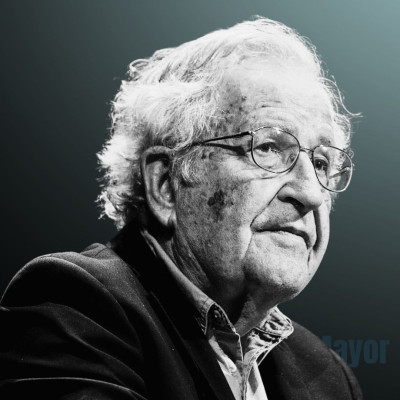
🇬🇧 Defining our times
Existential risks, propaganda, war, hope and the meaning of life : un des plus grands penseurs modernes nous explique sa vision des enjeux actuels