




Soutenir Sismique
Sismique existe grâce à ses donateurs.
Aidez-moi à poursuivre cette enquête en toute indépendance.
La technologie a-t-elle son évolution propre, en dehors de notre contrôle ? Comment est-ce qu’elle conditionne nos vies et notre histoire ?
Cela fait des milliers d’années que les humains développent et utilisent des technologies et qu’à mesure que l’Histoire avance elles se complexifient, se répandent et nous changent. L’évolution de la technologie est intrinsèquement liée à l’évolution de l’humanité et des civilisations, elle nous fait, autant que nous la faisons.
Et la technologie a à ce point évolué qu’elle est devenue absolument omniprésente dans nos vies, qu’elle conditionne notre rapport aux autres, à l’information, et au monde.
Et elle a à ce point évolué qu’on peut se demander aujourd’hui si elle n’est pas en passe de ne plus avoir besoin de nous pour continuer de se développer.
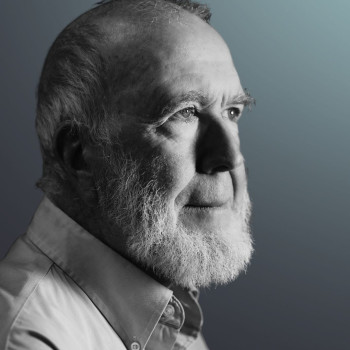
Kevin Kelly se pose la question de savoir ce qu’elle veut, puisque selon lui, l’évolution technologique a une direction, une trajectoire inévitable.
Kevin est un acteur incontournable du monde de la Tech depuis 40 ans, entre philosophie, hacking et prospective, il a entre autre fondé le fameux Wired Magazine.
Merci à la conférence USI (Unexpected Sources of Inspiration - https://www.usievents.com/fr) pour la mise en relation
04:00 - How do you look at the world ?
I have a very tech-centric view
Technology is now the main driving force on our planet
The solution to today’s problem is not less technology but better technology
Technology is like a cosmic force in the universe, it’s an extension of the same forces that produced life
Life and technology are brothers and sisters. Technology is inherently compatible with Nature.
07:00 - What defines our time ?
A transition : we are living the last days of an era
The new era is a truly global world, connected all the time
The challenge is building collaborative tools that make it possible to manage the planet
Synthetic and artificial intelligence is about to become real. AI and Humans will be the two dominant species. We are at the beginning.
The population will reduce, but artificial minds will grow in number
11:00 - Thinking in systems - « the Technium » as a something of its own
The technosphere as a something of its own : all the technologies working together and constituting a layer of reality
Every system has its own agenda. Technology has its own life, its own direction.
We are part of the technosphere and we are trying to steer it. We are both the shaper and the shaped. That makes things very complicated for Humans.
16:00 - Does technology want something ?
What technology wants ? (livre)
Hypothesis : technology is an extension of life. It has the same evolution principles.
Then the question to ask : is there a direction to Evolution ? I think that yes, from general to specifics. From simple to complicated life forms… Technology is very similar.
Entropy is powering evolution
What are the principles : The Inevitable (livre)
There are development stages, there is a sequence : you need electricity before having the iPhone.
Some evolutions are inevitable. On earth it was inevitable to end having quadrupeds at some points. Once you have invented electricity, you will end-up having something like the telephone and the internet.
23:00 - What is inevitable ?
Sentient AIs are inevitable. Minds were invented by nature many times. Technology will be making minds too, we just don’t know what they will be. We have a choice on the character of AI and how they fit into our lives. And we have to think about it now.
Accelerated biological evolution through technology. We need to think of what we want Humans to be (in the context of the evolution of AI).
NBIC > Nano-tech, Bio-tech, Information-tech, Cognitive-tech
The evolution of technology is inevitable because of the human desire to make new things forever
« I don’t see any way of stopping innovation ». Historically technology prohibition never lasts.
We will have human cloning as actually we already have it in nature : twins. It’s just a matter of what we get used to
34:00 - The amish model ? Shouldn’t we choose carefully the technology we want to use ?
The amish test and choose technologies based on their values, on the life they want to have as a community
We should be clear on our criteria too : what do we want technology to do for us and our civilisation ?
The example of horses as a way to keep everyone closed and able to come back for dinner
40:00 - The energy issue : can we continue with complex technologies when we should reduce our consumption of energy
We tend to underestimate the benefits that cheap fossil energy brought to our civilisation
Can you get nuclear energy if you didn’t have oil ?
We’ll return eventually to nuclear fission and hopefully we’ll have nuclear fusion. So after a transition, we won’t have a problem having to deal with less energy
Digital techs, AIs, don’t require a lot of energy to function, compared to transports. So the development of complex tech will not be limited by lack of energy.
The population will decrease (naturally), so technology will continue to evolve and becoming more complex.
50:00 - What is the more important question to work on ?
We should be working on world government as we have global problems and will need planetary solutions. But i have no idea how to do that…
52:00 - What to tell children ?
Teach them to ask good questions and to have an inquisitive mind, to question their own assumptions, to question authorities…
When they are young, it’s about their character, not knowledge : grit, perseverance, optimism…
Then, learn how to (you) learn. Every person should figure out how they learn best.
The Bible - (auteur inconnu)
How to change your mind (about Psychedelics) - Michael Pollan
Nouveaux podcasts

Sommes-nous condamnés à courir ?
Conclusion de la série : que peut-on encore choisir ?

Qu’est-ce que l’intelligence ?
Retour aux basiques: comprenons-nous vraiment le projet IA ?

Hommage à Marc de la Ménardière.
Réinventer sa vie, trouver du sens

Une IA pour les contrôler tous
La société sous influence, le pouvoir, la surveillance, et ceux qui l'assument.

Société : le grand effritement
Travail, vérité, mémoire, liens : comment l'IA ébranle les piliers de la société.

L'humain sous assistance
Continuerons-nous à penser ?

La mégamachine
Le corps physique de l'IA, ce qu'elle consomme, extrait, et rejette

La course et ses bâtisseurs
Argent, puces, États : dans les coulisses de la course à l’IA