




Soutenir Sismique
Sismique existe grâce à ses donateurs.
Aidez-moi à poursuivre cette enquête en toute indépendance.
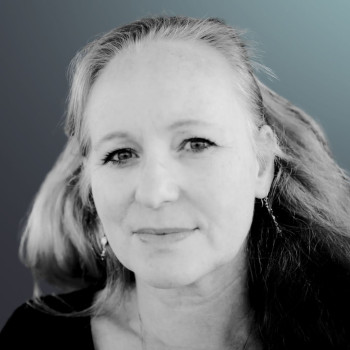
Nora Bateson is an award-winning filmmaker, writer and educator, as well as President of the International Bateson Institute, based in Sweden. Her work asks the question “How we can improve our perception of the complexity we live within, so we may improve our interaction with the world?”.
Nora Bateson est une cinéaste, écrivaine et éducatrice primée, ainsi que la présidente de l'Institut international Bateson, basé en Suède. Son travail pose la question suivante : "Comment pouvons-nous améliorer notre perception de la complexité dans laquelle nous vivons, afin d'améliorer notre interaction avec le monde ?
0:00:00 Introduction
0:03:24 The Complexity of the World
0:08:45 Shifting Relational Conditions in Living Systems
0:14:21 Understanding Systemic Process - Who Are You?
0:15:42 The Paradox of Complexity and Communication
0:18:19 The Journey of Learning Systems Thinking
0:23:11 The Problem with Oversimplifying Complex Issues
0:29:27 The Ghosts of Linear Efficiency and Loss of Relational Processes
0:33:06 Loss of Connection: Civilization, Capitalism, and Culture
0:35:27 Importance of Understanding Society and Earth as Complex Systems
0:35:43 Understanding Systemic Process in Relationships
0:39:07 Tending to Complex Issues in Society
0:50:04 The Challenge of Matching Responses to Problems
1:03:26 A Prayer to the Possible
1:06:15 The Art of Action for Nth Order Response
1:11:17 Living Intergenerationally: Learning from Each Other
1:15:02 False Hope and its Dangerous Manifestations
1:16:24 The Power of Possibility
1:16:45 Unexpected Power of the WAP Song
1:22:07 Parenting in the Polycrisis: Choosing the Context for Children
1:25:35 Nurturing Courage and Finding Strength in the Storm
Lien vers le livre de James Bridle : https://www.seuil.com/ouvrage/toutes-les-intelligences-du-monde-james-bridle/9782021480078
Julien : Hello Nora.
Nora : Hello. Nice to be here.
Julien : Yes, nice to be here and I'm really glad that you're here, and I'm glad to receive you on this podcast, so we can finally do this. So welcome.
Nora : Thank you.
Julien : So, quick introduction. My work with this, what I call an investigation on the world, is all about trying to make sense of the complexity of the world so that maybe we can make better choices today regarding the huge challenges we are collectively facing. And I'm saying this because I know that your work is all about answering one question, I don't know actually where I read this, but it was: this question is about “how can we improve our perception of the complexity we live within, so we may improve our interactions with the world?”.
And you are releasing a new book soon, I don't know if you have the date, which is titled Combining, in which you explore this question in depth by exploring the living, its beauty, its complexity, and the kind of impossibility to grasp it all. And we will of course talk about this book. But briefly, can you introduce yourself?
Nora : That's a funny question. Yeah, I will introduce myself, and I love that your work is really asking a very similar question, so I can see why there's so much kindred possibility here.
And I have been working with, playing with, and more than anything living into questions around the perception of interdependencies in living systems. Okay, so sometimes we call that complexity, sometimes we just call it life, but either way it is something very different than looking at the more mechanistic industrial logics and ways of doing things that are so prevalent in our world.
So I've done this through filmmaking, through writing, through teaching, through farming, through raising my kids, through tending my elderly mother, through being a partner to my husband, so I see no edge to this work. It's professional, but it's only professional if it's actually completely saturating your whole life.
Julien : Okay, that's an interesting way of talking about profession actually. Well, there's a question I ask to all my guests which hopefully will help you to dwell a little bit on this, which is: how would you describe the way you look at the world, or what are the glasses that you wear, and where does it come from? And we can talk maybe a little bit about your family there.
Nora : Yeah, okay. So what's the lens. Yes.
Well, I find that it's easy to get caught in various models of what complexity or living systems might look like. So for me, I try to imagine that I'm a meadow, and inside somewhere there is a meadow that is sort of my truth stone of where I go to make sure that I'm not confused. Because in all of our descriptions of ecological process and psychological process, societal, educational, physical and healing health processes, learning, we have existing ideas that are attached to ideas that are informed in more mechanistic ways.
And so it's tricky, because it's easy to get lost in the model, and the model is inadequate. And so I reach for this meadow that I keep inside to keep me able to hold humility, first of all. But second of all, the problem with living systems is that they're always moving, always shifting, always changing and always learning, always adjusting, always responding, always communicating. And in that communication and response and shifting it's very, very difficult to isolate and to “thingify” how something is behaving, whether it's an earthworm or a grass or my kids or a society or a media channel.
And I think that's what I'm really interested in, is: what are the ever-shifting relational conditions that are producing the various events that we might perceive as behavior or as communication? But what's informing that context?
So this meadow is my sort of internal teacher. And in the meadow of course you have lots of organisms, bacteria in the soil and earthworms, and you've got grasses and insects and you've got trees and you've got mosses and you've got fungus and you've got all sorts of things. And all of these organisms move in different ways, they change in different ways, they respond in different ways to drought, to rain, to cold, to an abundance of one sort of pollen or another, or an increase in population of an insect or a bacteria, or a loss.
So there's something there that has to do with looking at how each one of these organisms is shaping the possibility of response of the others. And that's huge. So that I find very rigorous and fascinating, and actually beautiful.
Julien : Yeah, and this is a good introduction, because I want us to dive into complexity, into systems thinking, into the living and how we can apply this, apply the learnings that you got also from observing the links between everything to our current situation.
And I discovered myself systems thinking a few years ago and it really, really changed my own lens. It forced myself to look beyond the events, as you say, the events only, which is where we spend most of our time, you know, when we watch the news etc., and try to see the dynamics, the structures, the links that are creating the event as kind of an emergence – and we can go back on that – and also to accept complexity and the fact that I probably won't be able to make sense of it all in the end, and no one can.
So we will talk also about the fact that a model is just a model, and we have to simplify reality to make sense of it, and it's kind of a weird thing that we have to do, but we kind of don't have the choice. So I will separate all these questions, but: how would you – you talked about systems – but can you define, with your words, because a lot of people are not really familiar with this, what is actually a system, and what does it mean to think and to view things as systems?
Nora : Well, I think probably the best way to talk about a system is to have an example, and there's lots of different kinds of examples. But let's start with the one that is closest to home, which is our own body.
So your body is, of course, it's holding the DNA of your ancestors, and their experiences, their nutritions and their loss of nutritions, and their illnesses and their immune systems. And it's also holding hundreds of trillions of microbiotic organisms that live on your skin and live under your skin, in your belly and in your body. And without those organisms you would not be alive. I think there's maybe 10% of your cells are actually human cells or something like that, the rest are all bacterial.
Your body is also holding your mood, your mental state, and whether or not you got any sleep last night, or fought with your partner, or are about to take an exam in sort of high-level calculus that you haven't prepared for, right, or talk to somebody that you're afraid to talk to.
Your body is a system that is not just your anatomy, and the digestive system, the nervous system, the immune system, all of those systems, but also connecting you to your family, your culture, your education, your capacity to create comfort for your body and health for your body. So who are you? And that question seems like you may be able to identify, okay, there's Julien. But where's Julien? Are you your idea? Where's the edge of you? Are you your children? Are you an extension of your… are you your tax number? Are you the music you love, the generation you were born in, the gender you live in, your political views? Are you your wealth? Who are you? What actually… who are you? Are you your relationships, your friends, your family?
So I think the reason I'm starting with this example is that I want to start with something that doesn't actually offer an easy in. It's important that we understand and hold systemic process as something that is so familiar we live in it. You live in your body, you do live in it. You live in an ecology, you live in lots of ecologies actually, lots of systems.
But there seems to be this tendency to abstract it into a definition, into something that might look like it makes sense on paper, but when suddenly you have to deal with an issue in your life, you just throw that piece of paper to the side and you go back to thinking however you were thinking.
So for me, this real work of systemic thinking is, you know, it's when you're dealing with your kids and your partner and you're having to actually really work with these deeply interdependent processes.
Julien : So it's all the different links, actually an infinity of links that we have with all the things, that make it kind of impossible to define the actual shape of things. Where is the beginning, where is the end. There is a paradox here, and I want to talk about this, an apparent paradox, because we can talk about complexity and we can talk about systems, we can build even, you know, models that kind of work and help us share reality, like using words to define something, because it's practical and we need this. And actually our brain works this way: we constantly simplify things and, just to be able to communicate, we need to simplify.
Like, say “this is our body”, and everybody understands what is our body, even though as you say it's much more complex than it seems. But we can do this, but we fail to understand really how things work. And that's something that you say in the first page of your book – and we can talk about it – which is: we can talk about the world, we can write about the world, but – and when I quote you – “the aboutness becomes an abstraction that takes away from the possibility of perceiving the living, changing, and combining life forms”.
Can we dwell a little bit on this paradox, and about the confusion there is between the map and the territory?
Nora : Yeah, this is a… we could do a whole PhD on this. But Korzybski, Alfred Korzybski, famously said “the map is not the territory”. And it's a wonderful expression, because it says “the map” – which, we don't know what map – is not… okay, so we don't know what is the territory, which is also not defined. And that's really important.
So “the map is not the territory” is a way of recognizing that there are these kinds of abstractions, and our living into them is a mystery. So you can put a territory… the map could be a territory, but it's not the territory. It could be a territory, but not the territory.
And I think for me, one of the things that I have learned – you asked me where was sort of the history of where I learned this version of systems thinking – and I had the very rare opportunity of being born into a family in Western civilization that was actually deeply engaged in the type of perception and thinking that most Indigenous cultures have been in for years. And the difference was that my father was aligning himself in some ways with the academic and scientific world, and trying to bring us an understanding of a different epistemology, a different way of knowing your world, into things like psychology, information theory, ecology, anthropology and so on.
So I grew up in a household where these ideas as intellectual artifacts were pre-digested back into life. Okay, so I didn't learn this stuff as an abstracted idea, I learned it as breakfast. As “what do you do when you're in a situation with a rattlesnake?”, “how do you communicate with a dog?”, and what is the way that we go about tending to the fish tank, or taking a walk in the forest.
And so instead of thinking… you know, there's this beautiful quote: Mark Twain once said, in a letter that he wrote to somebody, “I apologize I haven't got time to write you a short letter”. And what happens is that when you first get hold of an idea, you need to examine all the little intricacies of it. You need to grab hold of all the theoretical crumbs and corners and curls and slippery bits and dive in, and rigorously bathe in, and then they become you. And once they become you, you're not talking in that jargon anymore, you're living in a different way.
And so that was the household that I grew up in. So for me then the learning of the jargon came after. “Oh, this is what this is called. Oh, that's the name for this process. Oh okay, this is the way.” But the intuitive understanding and the physical intimate understanding was there when I was tiny.
Julien : And yeah, you can see that all the kids function this way, because they experience things before knowing the words that go with the experience. And there is this very… we call it naive, but it's not naive, it's just being in the now, and living with the interactions and understanding. And actually they take a few months, the babies, to realize that they are, or to think that they are, unique and different from the outside world. You know, the first months it's like one thing, you identify with the mother etc.
But how…
Nora : You're so right. So kids arrive with this, and it gets taught out of us. So the difference was that it didn't get taught out of me. And that's a quite touching story, of my father being very nervous that it would be okay. And he used to take me to the bus stop to go to school with tears in his eyes and say “they're going to ruin her mind”.
Julien : Well, they didn't. We can go back to this question on education, I think there is a lot of insights to get. But so, what is the problem actually with losing that? Because I want to go to the big society issues, like social issues. We have very complex issues today, very systemic issues all over the place. You take environmental crisis, climate change, politics etc., any event, you can have complexity within it that's usually overlooked.
Why is that such a problem, and especially is it more a problem today than it was a few decades ago?
Nora : It's a problem because whatever the problem that gets identified as being the problem that needs to be solved, is the one that will soak up all of the attention, the funding, the projects, all of the work will go into the wrong place.
Julien : Because we just focus on one thing instead of looking at the whole.
Nora : Yeah, because if you isolate a situation like, I mean even CO₂ in the atmosphere, if you isolate that and you try to solve the problem of CO₂ in the atmosphere, what's not in that is what it means for you and me and our friends and our friends' kids to think about producing an identity in this world that requires signalling and communication of, you know, we have phones or we have new clothes or sneakers or what kind of car you drive or what kind of car you don't drive, or what are you eating, and these things that are mixed up with identity are nowhere near the attention to the response of carbon particulate in the atmosphere.
Julien : You can develop, yeah, just to… it's not so clear, that the way you define your identity has the link with CO₂, so maybe that's a good example.
Nora : Yeah. So you get mixed up in various forms of transport of goods, of various kinds of resource usage, of all sorts of exploitative labor processes. You get mixed up with technological processes that… you know, whatever, if you order something online, or you're participating in just the great Instagram scroll, or downloading movies. Whatever it is that we are doing with our day is actually producing all sorts of carbon excess.
And why do we do those things? Why do we watch Netflix? Why do we scroll on Instagram? Why do we take the bus to go to school? Right, so we do it because we're alive in this context. And to not do it is… you know, you can argue that we could live out on the farm somewhere and detach from everything and chop wood and carry water, but we are relational creatures and, for the most part, people are engaged in social relational processes that help define their own identity and their relation to other people in that identity through all kinds of consumer things.
I mean, when you get together with your friends, you might have a bottle of wine or you might have some bread and cheese, and there it is. And it's so innocent, it's so innocent. And so then when we point to the 17 Sustainable Development Goals and we can say yeah, we do need to clean the oceans, we do need to clean the air, we do need to tend to the soil, we do need equality and we do need to offer… you know, all of them, they're all correct. It's just that if you side-by-side that with the image of a mother nursing her baby, there you have all of them.
Not only do you have this intellectual, emotional, intergenerational love and care communicated, but you also have the need for that mother to be able to breathe clean air, drink clean water, for her food to be clean and able to nourish the next generation, and for the other mothers to be able to nourish their babies, and the other parents to be able to be nourished, to be emotionally, intellectually, physically able to live. And that means there must be equality, there must be care to all of these things.
But when we parse it out as 17 different squares, it looks like 17 different problems. And it's interesting, I think, to look at the way that nature tends to that. Because as mammals, our species will not continue if we cannot feed our babies. That's pretty much the prerequisite of mammal life. So: how do we feed the babies? So even if you don't have a baby, you're still responsible.
Julien : Okay. So how would you define… is there a common root to all these issues that are listed by the UN – and they could be listed in many different ways – but is it because somehow, as humans or as a civilization, we lost touch with the complexity of the world? Or we lost touch… or we built up too much complexity for us to handle? How do you frame today, kind of, the predicament?
Nora : Well, I think there are ghosts that we are living with and we don't even know that we're living with them. And I mean that in the sense of: our ancestors and our ancestors' ancestors were learning to be in a world. They figured out how to be in a world in which they had to have small farms, and they had to live within various socioeconomic structures and during wars and droughts and different issues, into which the premises of industry took hold and made sense and offered comfort and security and safety and promise.
And that was very real. It was very real. And in that there was a loss, because creating linear productivity and efficiency served for a while. But in order to create linear efficiency and to optimize for particular product outcome, you actually have to pull things out of their other relational processes.
And this happened even in language, okay, where people used to say – before the factory became a sort of a mirror image, the school system, right – there was a way in which people spoke, where they would say something like: “I'm going to school and learning to read. I'm going outside and tending the garden. I'm going to the square and buying some grain.” And then that changed. With this linearity came a different way of thinking that so permeated our experience of life that we started to say: “I'm going to school to learn to read. I'm going to the square to buy grain. I'm going outside to work in my garden.”
And when that happened, then it became necessary to go to market faster, and get more grain cheaper. And if you come home with no grain, you failed. But if you're going to the square and buying grain, then you're going to the square – and that's a whole world of experiences – and buying grain – and that's a whole world of experiences. But do you see what happened? There was a loss of even an implicit, intuitive and very intimate connection with a different realm of possibility, and that was the possibility of complex process.
Julien : And why did that happen? Do you see this as something that was kind of inevitable at some point – since the… some people would say, you know, since the moment we started to build this kind of civilization we end up optimizing things – or is it related to capitalism, as some people say, or is it related to Western culture that divides, you know, human from the rest of the living beings? Where do you see that? Is that actually useful to understand where it comes from?
Nora : I mean, I think it's coming from all over the place. And it takes lots of forms. So we see it in the school system, we see it in the health system, we see it in the whole field of psychology, we see it in politics and economics, tech…
Julien : So I would like to stay a little bit with systems, because systems thinking is interesting because at the same time it says we have to acknowledge complexity and the number of links between the parts, and the fact that we don't understand it all, and at the same time it's quite sophisticated. And we know a few things about systems and how they behave. We don't know it all, but it's useful also to, for example, see Earth as a big complex system, because it informs us about how it's evolving.
So can you talk about some of the things that we know about the behavior of complex systems, like emergence or pre-emergence or tipping points? What's interesting to have in mind that can be useful then to understand why it's actually important to understand that society and Earth are complex systems?
Nora : Well, there's a lot of different directions into this question that you're asking, and what I want to be careful of is how this idea of systemic process – which is how things are in relationship with each other – and those things… it could be your lung and your heart and your digestion and your vision and your balance, right? So those things. They could be the school system, the health system, the economy and the technological system, transportation system. Those things. You know, they could be in a forest: the trees and the forest floor and the bacteria in the soil and the mycelial organisms and the insects and the mammals and the bird life and the mosses.
But in any of those cases I don't want to get distracted by the things. Because one of the ways in which I think you can go terribly wrong with systemic thinking is to think: if you just have a big enough spreadsheet and you pour in the data from enough different directions, that you'll understand the system. And this is not so.
So let me just give you a quick example. Let's say we're talking about a family of four. We've got two parents and two kids. Now, you probably know several families of four, two parents and two kids. And if you look at the family as being two parents and two kids, and you say “okay, let's stream in the information from each person in the family”, you will not understand very much about that family. Because it doesn't actually happen in the parts, it's happening in the relationship between the parts.
Now, the parts could be an expression of those relationships. People could develop various habits and ways of communicating that are produced in ongoing communication with other people in their family. We're shaping each other. And that's the thing, this piece of understanding ecological process not as a lot of individual units that could actually be replaced like your carburetor or your distributor cap in your car. If something goes wrong with your car, you just replace the bits. If something goes wrong with your family, you don't replace the parts.
So the work has to be done, the tending has to be done in the relational process. And that is not just one directional. If you have an issue with your partner, the odds are pretty good it's going to start manifesting in some way through the kids and you. And likewise, if the kids are having trouble, it's going to start to pinch and shape and form your relationship with your partner in a different way.
So where's the problem? How do you tend to those sorts of issues? And I think this is the part where the rigor is necessary, because the habit is to isolate a problematic situation, do a deep dive on it. What is the problem, what's the root of the problem and what's the solution? “Let's decide and envision what the solution is and now we'll draw a linear strategy step by step to get to that solution.” And with a lot of things in life that's fantastic. It's great if you're making an airplane, it's great if you're fixing a truck. It's not great if you're tending to a family or a society or a lot of these much more complex systemic processes, because of the pre-emergence, because of the emergence, because of what was affordable in the situation, what was possible.
So I think this is something in the book that I'm really exploring, is this question of what was possible. And here, I'll read you this one little piece from the beginning of the book, and I think you mentioned this. So it's called To Live in Another Way. But it ties into what we're talking about here.
At first it appears that it's the parts of the system that must be made better or fixed. Then it becomes clear that the system is not in the parts, it's in the relationships between them. So it seems like it's the relationships that need to be made better or fixed. But relationships, it turns out, are made of communication. And then the communication becomes the place to address the needed adaptations. And then you realize what is communicated is not what is expressed, or even what's not expressed, it's what it was possible to express. That's where the limits move. In the combining, how shall I tend to the premises of what it's possible to communicate?
Julien : Well, thanks for the reading. And we can start talking about your book. I told you I haven't read it yet, I just read the intro. What does it mean, Combining, and why did you choose that keyword?
Nora : Yeah. I chose that keyword, probably for all the reasons we've been talking about. But first and foremost, to hold us in an ongoing attention to something that is ongoing. So that things are combining, not combined, not combinations, but they're combining. And it's the difference in attention if I say “look at this thing”, or if I throw it to you. And when I'm throwing it to you, you have to watch it in movement. You have to move your body, you have to stay in a whole different kind of alignment with something that is actually also in movement. You have to be moving too, because you are.
We are changing as all of these things are happening in our world, as we're learning, as there's all sorts of technological advances and so on and so forth. So combining for me was the title because I wanted to keep that in mind. Does that make sense?
Julien : Yes, it does. And I see how difficult it is, but also how to apply it as individuals, kind of to be flexible, go with… don't try to understand everything and don't try to master everything and to plan everything, and to understand that there's a kind of philosophical process in it, I mean, we can find philosophical heritage to it, which is okay, about how free are we as individuals, what defines individuals etc.
And I think it's not that easy to apply on the day-to-day, but I'm wondering: what do you do with this concept at the level of society? We have so many issues that are related to, first of all, the fact that more and more we fail to see things at a complex level. We tend to simplify everything because that's also the structure of our social media, of our media and the economy of attention that limits our capacity to think through complexity, and everything becomes binary etc. So we are in a context that is very much against us being able to do this, and we have really, really complex issues where everything is inter-twined, everything is related.
Do you have an idea on how society can take this and make a better job at framing the issues and then maybe finding responses?
Nora : Well, I think first of all it has to do with, like you said, not succumbing to the seduction of the simple explanation, the simple version of taking a stand or the simple version of pointing blame in one direction. And it's compelling because the pointing of blame is not just about pointing blame, it's complex. It has to do with solidarity and relationship and recognizing that you want to be supportive of the people that you have your team, important relationships with – I mean potentially survival-level important relationships.
And yet, our histories are so blurry. There are so many stories that are overlapping in so many ways, and I think that for most of us we can look back at our ancestors and recognize that they were part of a story that brought us here. And some of our ancestors benefited from that story, and some were really hurt, destroyed and damaged and traumatized in that story. And here we are. How do we think about what happened in the past and what kind of future we want for our children, and what are the possibilities now to communicate, and what's not possible to communicate? Why is it that we may not be able to actually partake in the kind of complexity that would offer and make visible different sorts of responses?
And I don't know what those are, so I'm not in a rush to say “here's the hack” or “here's the solution”, because that's not the point of this. The point is actually to start in a different place and see where it goes, as opposed to starting from a position of a mechanistic and very rigidly defined…
I mean, I think that's one of the issues that you see so often when you asked me today to introduce myself and I laughed. It's difficult even to introduce yourself without reducing yourself.
Julien : Of course, yeah.
Nora : And the reason why is that because I want to give you a few things that maybe you can keep in mind, or that make me sound important, or that will make you like me, or that will give us something that we can talk about. But it has nothing to do with who I am. It's there, but that's not me. You're going to find much more of me just in the resonance of my voice, or the things I'm not saying.
And so, I guess when we look at the devastation that we are actually living in – in geopolitical versions, economic versions, technological crisis, ecological crisis, pharmaceutical, health crisis – again and again and again what you see is that there has been an attempt to solve a problem in the past by cutting that problem away from the contextual information that attached it into so many things that were important. And in the moment it made sense, in the moment, to do that reductionism. But then there were consequences, because you couldn't actually do it.
And so I think I have several stories that I tell in my work and in the book about moments where there's a different kind of response. And the term that I use for this is that it's a response that meets the problem but doesn't match it.
Julien : Yeah, and actually I was… I will let you develop on this, but it makes me think: isn't there just a problem with the word “problem” and with the word “solution”?
Nora : Totally.
Julien : You know, like we always want to find solutions and define a problem. Now I refuse to use the word “solution”, I just use “responses”. But yeah, you see that the same way I do, I guess. By trying to define and to reduce a problem in such a complexity, in such a complex world, we tend to lose the context. But how can we do otherwise with the today structures that are in place, or can it be done otherwise actually at a collective level? Well, “can” and “cannot”… I mean of course it could, but could it?
And I think what you're asking is: is the context of today's world so allergic to context that it will never be able to respond to context, or are we as living organisms and ecosystems of living organisms, are we somehow inherently capable of making this shift? Some days I have my doubts, I got to tell you.
Nora : Yeah.
Julien : Share this.
Nora : But other days I see things happen and I look at things that get created and I think “that's what the human experience could be”. And I have kids, and so I want there to be the possibility.
Julien : Do you see this, how do you call this, pre-emergence, things that you're observing that could be going the wrong way or going the good way? How do you spot these?
Nora : Okay, let's talk about this. I like that we're on a podcast talking about this too, because there's something I think important about recognizing that everything we say and everything we don't say, everything we express and everything we don't express, is actually contributing to something that I would call an ecology of communication.
Think of it as a forest, and everything that is able to be communicated goes into that forest and it either opens up the possibility for new things to grow, or other things to grow, or it's like pouring bleach on the roots and they can't grow anymore. So I think one of the things about this book is that I really wanted to meet the reader in a whole ecology of communication. Come and meet me.
Okay, so there's things in there, big chapters, that are hard theory, hard, and I'm asking you: meet me, come on, come and meet me. And then there's poems that are just about the changing of the leaves, and it's just looking out at the world and saying it's beautiful, and I'm saying “come and meet me”. And there's pieces that are about sex and about parenthood and about food, and there's art, and there's art. So some of it isn't even verbal, it's non-verbal communication.
And what's important to me about the whole book is not anything that's written in any of the pieces. It's how they are combining in you. And that's a completely living, vivid, untamed, undomesticated process of what the impressions are that come up for you, and how they meet your existing impressions.
So this idea of an ecology of communication…
Julien : Does it mean that – and I totally hear you, because I'm usually telling my listeners “do whatever you want with it, because anyway this is what you will do”. I don't know how this information will be combining with your own system, and this is why I don't have a precise goal, because that would be ridiculous, because you don't know the context in which the person is listening, you don't know who's that person. So just putting things out there.
But, so then in the pre-emergent question, tending to this ecology of communication is probably one of the most important aspects of tending pre-emergent possibility. And it has to do with creating the conditions that are unseen at present but that are producing possibilities for the future.
And so we might look at just the way that we're having this conversation right now, or the way that this conversation is combining with other pieces that somebody might hear on the same day, and recognize that they are flavoring each other, like ingredients in a soup. And that these ideas and these possibilities, they coalesce and they combine, and later on down the road you find you're in a conversation with someone and your response is actually really different than it might have been on a different day. And your response being different makes it so that their response is different than it would have been. And suddenly what's possible in that relationship has shifted.
Where did that shift begin? Because you could say there was an emergent situation and suddenly I was able to respond differently. But the readying, the time and the other contexts that had to come into play to allow that to happen were unseen.
And I think this is one of the things that I would like to say again and again, is that while we may see an emergent situation in one context – for example there's a sort of an educational crisis right now where there are students, young students, all over the world who don't want to go to school, and their parents just seemingly cannot make them go to school – now we could look at this as a failure of the school system, we could look at it as a failure of parenting, we could look at it as a problem of kids being on screens too much, or they're getting ideas from TikTok or they're just brain-dead from too much scrolling, or we could look at it as a nutritional or a physical issue, that they're not getting enough exercise, they don't have enough oxygen – you know, physiologically they just don't have enough oxygen in their blood. We could look at it as a political, spiritual crisis, that they're looking at their future and thinking “why?”. There's not going to be any polar bears, there's not going to be any water, there's not going to be any jobs, there's not going to be any food, why should I go spend my days in that classroom?
There's a whole lot of things we could look at as possible causations. Again, it's the way that those things are informing each other that becomes really interesting. How does that sense of despair inform a lack of interest in going out, inform a need to be all that more entrenched in a particular social scene online, inform the way that there's an isolation from older generations and parents, and how does that inform the way the parents feel about their success or failure – and that makes them anxious. “I need my kid to succeed in life, they've got to go to school so they can get jobs.” And how does that then pressure the schools? That's one direction.
And then you can look from another direction, and see all the ways in which the schools are not funded, the teachers can't do what they need to do, they can't meet the kids because of the standardized tests, there's not any good food in the schools, there's not nearly enough arts, they're basically preparing the kids for a future of 50 years ago.
Okay, so all these things are combining. And they are going to combine into all sorts of things that will later on keep emerging. So it's tempting to look at the thing that emerges and say “this is the problem”. But it's not. That's way down the road.
Julien : But how do you make decisions within that framework, and can you have objectives since it's almost impossible, when you're dealing with complex systems, to predict what would be the result of your little plan that you put in place? Sometimes it can create things that are so different. I always take the example of an activist, you know: you go out there, you have your cause, which is usually a simplification of the complex things that you're trying to fight, and you say “this is the issue, this is the enemy, and this is my plan and this is my objective to change that”, but the reality is that you don't know what will come out even if you succeed. And you have many, many examples where you think you're creating a positive vibe according to you and you end up with the opposite.
So in that context, does it mean that you're just an observer, and you just act according to your own compass, with your own values, with your ethics, and you don't really need to look at the possibilities and the results, without an objective – which is very Oriental, you know, like the Bhagavad-Gita, you can act without having an objective in mind – or can you have a kind of plan? Yeah, you get my point. Especially when you are at a place where you need to take decisions, what do you do?
Nora : I mean, I think you have to pay attention to the particulars in the situation. So that would be the first thing that I would say. And then secondly, if you find that you're in a double bind, that you've gotten yourself in a situation where if you respond in one way you lose, you don't succeed, you fail, and if you respond in another way you also fail, then the only thing to do is to actually look to other contexts, other ways of seeing, and to recognize that all of the situations that we are in right now are totally transcontextual.
They're taking place like that example I just gave about the school – it's an economic, political, social, health, technological, psychological, educational issue. But all you're looking at is your kid, and you're thinking “my kid is failing”. And that is such a loud experience, that it screams over all the ability to perceive these other contexts.
And yet, when you start to actually pay attention from other directions, things become possible that you didn't see before, that were sitting right there. And you never know what they're going to be. And I just… I don't know what to say, except that this whole book is a prayer to the possible. But it's not the possible you think you're looking for.
And that, I think, is important because in those moments of decision making and goals – you asked about goals – I would say that I do operate with a goal. But it's not the goal that you're going to think I'm going to talk about. So I would want to bring possibility and vitality to a situation. How can life thrive in this situation? What can I do? Because I think if you place your goal at first order, you're going to always make the mistake of breaking those other relational processes, unless you get very, very lucky. But most of the time, if you try to fix the “my kid's broken, I have to fix my kid”, so you end up giving them a bunch of medications just so that they can fit back in a system that they don't fit in. And then you find out there's millions more of these kids. But we decided we'd fix the kids instead of the systems.
Julien : And yeah, so where's the life in that? How do we hold that for the next generations?
Nora : So that's kind of your compass.
Julien : Yeah, that's kind of my compass, because if you think about a meadow and you say “what's the point of a meadow?”, well, a meadow doesn't have a point. Life is the point. It's just making life. And all the organisms in that meadow are going to have to change if it wants to continue making life. Some will change slowly, some will change quickly, some will – some years – bloom and be abundant, and other years be of slight population. But there is a sense into which that idea of action right now is so locked in first-order response.
And I think, for me, I'm really practicing – and it is a practice – the art, and it is an art, of action for later. Response, action that leads to action that leads to action that leads to action. That moment when we learn something, and then something else happens, and then you have a conversation with someone, and you said something different, and they said something different, and then they responded to their spouse differently, and then they responded to the kid different, and then… you know. There's the way in which life makes life, is by being in lots of different contexts and lots of different relationships.
Julien : Can you build a society on this? I mean, again, I totally understand, and I think it's very insightful even for me as an individual: kind of “let go” with many things, with the future, with your kids, with trying to control everything. I hear there's a little bit of this in what you say. But again, we have so many present issues that are related to what's happening at the level of a society, at a government level, to be able to scale very quickly. Or is it not actually a relevant issue, because it's locked and there is nothing we can do against the structure, and therefore we have to place our attention somewhere else? Or is there a way to change the way we build society?
You were talking about school. School is broken, you can say, but school is just an expression of the economy, it's just an expression… the economy is broken. So the economic model is broken. Can it be changed?
Nora : Well, a lot of this work in this book is based on the last decade of work working with what I call warm data.
Julien : Yes, I wanted you to talk about this here.
Nora : Which is this recognition that there is a lot of information that's not making it onto the spreadsheet. So when we talk about making decisions, we're making decisions with a lot of information missing. And with that information missing, the decisions are inadequate and, in fact, harmful.
So there's a couple questions that you're asking here. In the warm data work, one of the things that has become more and more visible to me is that, as people, we actually need each other. And that there are lots of ways in which we are captive within structures and institutions and societal histories, patterns that simply cannot hold the events and the crisis that some people are in right now in full-tilt experience. Other people are looking down the road five, ten, three years. But that we can't actually… our systems, as they exist right now institutionally, cannot hold what needs to be held.
So we have to hold it for each other. And there has been such a separation that has been, again, institutionally instigated, so that your tax number is your individual number, your water runs into your house, your electricity is in your house, your bank account is your money, you go to your fridge to get your food. We don't meet in the garden, we don't meet at the water pump, we aren't gathering wood together. We don't know how to be together anymore.
And I'm living right now with my 94-year-old mother, and also my 26-year-old son lives in the cabin next door with his girlfriend, and we've got three generations. And then my husband's Swedish kids are here too. And I can tell you we have no idea how to do this. Absolutely no idea how to live intergenerationally. And honestly, I think it's probably one of the most important things that we could be doing for our next generations, because there's not enough resources for people to be living as individual units all over the place.
Now, in some parts of the world people are already doing that, they never lost that art. In other parts of the world, they really lost the art. And let me tell you, it is gone. So it's so easy to get offended and to be frustrated and hurt and to want to walk out. But what does it mean to be in a situation where we can't walk out on each other anymore? We're going to have to go through our frustrations into a way of learning, learning from each other, with each other.
And I think that the only way to really do that is with a change of tone, a change of texture of our communication, a change of the vibe, that is deeply informed, mediated, by seeing that there have been really big mistakes made. We've been separated from each other and from the possibilities of what we could do together.
Julien : What does that mean when that “together” that you're talking about means working with someone that has hurt you?
Nora : Mhm, yeah.
Julien : And you see that you don't need to start that… you don't need to wait for the rest of the society, otherwise you can wait a long time.
Nora : Yeah. I mean… and I think the more… My dad once was asked to describe a healthy system. Okay, that's an interesting question, because it's much easier to describe an unhealthy system, because you can point to the parts that… or the expressions where health has been lost. But if you are asked to express how do you describe a healthy system, and his response was really interesting. He said: a healthy system has increasing complexity, increasing relationships.
And if you look at what's happening – the great simplification of our friend Nate Hagens.
Julien : Yeah, yeah, exactly.
Nora : If you look at what's happening, we're getting more and more isolated and unable to even form those communications that would make those relationships.
Julien : But it's strange, because in a way maybe we are just at the beginning of a… I mean, this is a threshold or tipping point, because you can see that in many ways it's getting more complex. And this is also why it's difficult to see the simplification that may be coming. Because technology is getting more complex, everything is getting more complex, but many other things are getting more separated, as you said, relationships and stuff.
So how do you see things evolving? And we're getting to the end, but what scares you and what gives you hope? And is actually hope a good topic?
Nora : What scares me… well, I can put these two right together so we can get a quickie out of this. What scares me the most is false, shallow, inadequate, reductionist hope. Hope that's built out of the same ghosty material that built the industrial solutions all along. That kind of hope scares me. And it scares me because it manifests as fairly authoritarian projects of telling people how to live, how to think, how to feel.
And I fundamentally think that that is dangerous and leads to revolutions and violence. It doesn't work. That's bad. That's not tending to the complexity of what can be.
However, I do have hope. But my hope is in things that I think are right now not even visible. The possible, what's possible. And for me, that's the question.
So I think one of my favorite examples of positive systems change is something you're not going to think of as positive systems change. It's nothing that was generated at a conference. It didn't come out of a systems thinking tank. It wasn't something that a bunch of smarty-pants with various colors of Post-its produced. But there's this song, and you might know the song, the Cardi B song WAP. The WAP song is probably one of the most significant pieces of anti-rape activism that ever were created. And it looks nothing… it doesn't look like a political movement, it doesn't look like an activist project, it doesn't look like… there were no NGOs that helped fund it.
But that song brought mothers and daughters and women and their girlfriends, their sisters, and their boyfriends, their brothers, their friends of all kinds together to do… You know what the song I'm talking about?
Julien : No.
Nora : “There's some whores in this house” with the bucket and the mop. Okay. Well, it's a song celebrating a woman's vagina getting wet. Okay? And it's the first piece of media that ever did that. And so, when we talk about systems change and possibility and what can happen, I think we're looking in the wrong places. There are things that are taking place that are moving things that people have tried to move for generations.
Julien : It's culture.
Nora : It's culture and art. And it's culture and art, but it's sneaky things coming out of the sides that are not noticed. No one sees that coming, right?
Julien : Yeah.
Nora : And then I hear people talk about that song and they're like “oh, that's so vulgar”. And it's like: vulgar? Let me tell you what vulgar is. Vulgar is when it's not wet. That's vulgar. This is not vulgar. This is something incredible that's happening here.
But I'm saying… yeah, well, see, I grew up in California in the 70s and I was surrounded by people who wanted to change the world from the time that I was teeny. And the questions that we're asking right now, they were asking 55 years ago. So I guess there's a part of me that is really starting to recognize that if things are going to shift, there's going to have to be a lot more weirdness. We're going to have to be able to be a lot more creative.
And I think that's also part of what I tried to bring into this book, is the voice of something creative and explorative and vivid and live, exploring the edges. And that making change is not a flat process. You don't have to somehow be… you don't have to lose your humanity to make change, you actually have to find it. And find the curly weird bits, and the mold that grows on your soul when you watch too much of what's happening in the world right now, and meet that. Because right next to it is your sexuality, the love of food, music, the capacity of human beings to be together and actually make life.
Julien : What about the kids? I have two little daughters, four and seven. They're still very small, but growing too fast. And I'm realizing that their education is very classic in a way. They're going to the same school, same kind of schools, we live in the city and it's easy. But I'm questioning myself a lot on this. As you said when you mentioned your father, I'm every day asking, like: what am I doing, what am I doing? And sometimes I say okay, it's fine, they will just have the life they will have, in the context that will be theirs. So don't put too much pressure on your shoulders. But at the same time, I can still choose the context a little bit, and I don't know if you have any thoughts on that, some insights – I guess you have, because since you have kids you've been through that – that you can share.
Nora : Well, these are the babies of the polycrisis, the babies of the metacrisis. And as their parents, it's a tall task, because the things that you want to give them, you actually can't give them, because we don't live in a world in which you can do that yet. But somehow all of us have to kind of live in two worlds as we go over this bridge together, through this wave together, through this storm together.
I'm going to read you another piece.
Julien : Yes, please.
Nora : So this piece is called Mama Now, and it absolutely applies to papas too, so you can call it Papa Now if you want. I wrote it for my kids, who are a little older than yours, but yours will be older in 10 minutes. You can't believe how fast it goes.
Mama Now
Your eyes will see the derailing of assumptions,
your hands will hold the crumble of the old matrix.
I do not have any authority to lean into,
I have empty pockets where parents used to advise their children.
I don't have any maps, myths or mother wisdom for you.
I can fix your breakfast but not the culture.
And when you ask about how to be a good person
I cannot lie to you.
Everything you touch in a day is in some way bloodied.
You have been born into an edgeless violence.
But I will not judge or measure you
against a bygone metric.
I'm here too, ready to learn with you,
unsure how to be or who to be.
I can only read fragments of your worry
as the future is a horizon of confusion.
I cannot protect you and yet it is my only job,
aching as I witness from this side of the hourglass.
Other generations of parents knew the outlines:
school, career, family and retirement.
But your life will be another shape entirely,
forming in the fractures.
When you say you need a goal,
I offer an expired ticket.
Superficial memes roll off the tongue
right into your detector.
Success in the existing system is not going to do you much good.
Your integrity is your rage and I will nourish it.
Your dignity is your curiosity and I'm tiny beside it.
Your courage is your pain and I will sing to it.
With you we will riot together,
we will notice the nuance of small graces in the day,
we will wash the grit of loss for each other.
I am your mama and your future is the story of a storm.
I am your cabin, your boots, your rucksack.
Julien : Thanks, Nora.
Nora : Thank you.
Julien : I think it's a good way to end our interview and let people with this. Thanks so much.
Nora : Good, I hope that it was a good thing for everybody. I really enjoyed being with you.
Nouveaux podcasts

Sommes-nous condamnés à courir ?
Conclusion de la série : que peut-on encore choisir ?

Qu’est-ce que l’intelligence ?
Retour aux basiques: comprenons-nous vraiment le projet IA ?

Hommage à Marc de la Ménardière.
Réinventer sa vie, trouver du sens

Une IA pour les contrôler tous
La société sous influence, le pouvoir, la surveillance, et ceux qui l'assument.

Société : le grand effritement
Travail, vérité, mémoire, liens : comment l'IA ébranle les piliers de la société.

L'humain sous assistance
Continuerons-nous à penser ?

La mégamachine
Le corps physique de l'IA, ce qu'elle consomme, extrait, et rejette

La course et ses bâtisseurs
Argent, puces, États : dans les coulisses de la course à l’IA