
#75 - Interview
🇬🇧 The human quest for power
« Nous ne pourrons relever les défis du siècle sans accepter de diminuer notre propre puissance. »
Écouter sur :
🇫🇷 fr



Soutenir Sismique
Sismique existe grâce à ses donateurs.
Aidez-moi à poursuivre cette enquête en toute indépendance.
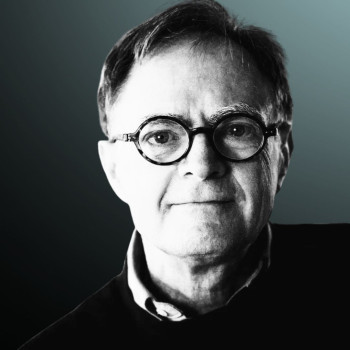
Richard Heinberg est un des penseurs qui m’a le plus influencé ces derniers temps. Il fait partie de ces trop rares personnes qui parviennent à prendre de la hauteur pour remettre en perspectives plusieurs des grands enjeux actuels, parmi lesquels l’économie, l’énergie, l’écologie.
Son dernier ouvrage Power, qui vient de paraitre, m’a fasciné.
En étudiant le pouvoir et la puissance, leur signification, leurs différents aspects, il parvient à capturer une des grandes dynamiques d’évolution de l’humanité et pose un diagnostic limpide et sans appel sur les enjeux actuels.
On en parle dons cet épisode à ne pas manquer.
What is the situation we are in right now as humans, what defines our era ?
What is still commonly misleading us the most when we look at the world today ?
What is Power ? What are the key elements, the key principles to have in mind before we go into more details ?
How power games are so central in how our world functions ?
What are the main sources, the main forms of power for humans through History, until today?
How does power can explain the super fast evolution of the past decades ?
Are we over-powered ?
Can we keep growing our economies, our energy consumption, our population, improve our lifestyles AND solve say the climate crisis ?
Can capitalism limit its appetite for power and for creating inequalities ?
Then why does it appear that humans are failing to restrain their power and are willing to risk literally everything in pursuit of it?
How can we limit our individual and collective power ?
What’s a pathway to avoiding the worst outcomes during the rest of this century?
What are the most important levers to try to pull, the acupuncture points that could be tipping points ?
Knowing all what you know, what do you think will happen in the coming years and decades ?
What is your advice anyone listening ?
2 books that everyone should read ?
The limits to growth - Donella H. Meadows, Dennis L. Meadows, Jørgen Randers, William Behrens III
Tao Te King - Lao Tseu
Le blog (génial) de Richard : https://richardheinberg.com/
Julien:
Hello Richard, how are you?
Richard:
Hello, hello Julien, I'm doing well. And yourself?
Julien:
I'm fine, thanks. We were just discussing that I'm back from a big summer break, so I'm really glad to start my September season with this interview in English, and with someone like you, who has been looking at all the things I've been investigating for three years. You have been looking at this for decades, and you have been among those people trying to make sense of the trajectory of our modern civilization, which is basically what I'm trying to do here at my little level.
You have done this research, which I find very interesting, by connecting all sorts of topics together, by trying to think in systems, and by trying to analyze the links between energy, the economy, our civilization overall, and ecological matters. And this is really what I would like to talk about today with you: how to make sense of our times and how we should understand today's key challenges, and maybe what to do about this.
So, I mean, let's jump into this. What is the situation we are in right now as humans? What defines our era, and how do you describe this predicament, this complex challenge humanity has to face right now?
Richard:
Right. Well, first of all, in understanding any species at any time, the most important things to take into account are population and resources, and the master resource is energy. Food is a way of getting energy from the environment, and so looking at any given species, population and food are the two big factors.
If you look at human history, we've gone through a series of shifts in the ways that we extracted energy and resources from the environment. The biggest one was the advent of agriculture some eight or ten thousand years ago. But the biggest one in quantitative terms was just recently, when we started using fossil fuels, in just the last 200 years.
Fossil fuels, of course, are an energy source, but they enable us to extract other resources. With tractors and steam shovels and powered equipment of all kinds, we can extract resources from the Earth, transform them into products, use those products, and then those products become waste. So waste is also a factor in the life of any species, but in most species, in ecosystems, waste gets recycled.
Now, with industrial humans in the last 200 years, waste has become much more problematic, because we're extracting so many resources. Just the process of extraction results in pollution, waste. But then, once we're done with those resources, there's also more waste and pollution at the end of the process.
So our human predicament in the 20th and 21st centuries really is: we've grown our population because we could, because we had the energy and resources, from 1 billion at the start of the Industrial Revolution to 8 billion today. We've increased the rate at which we consume. Our per capita consumption has increased approximately 800 percent, about eight times over, in that same period of time.
And the consequences of this are everywhere. Climate change is one of them because we fueled this whole process of growth with fossil fuels. Using fossil fuels results in greenhouse gas emissions, and we're changing the climate. But that's only one aspect of the situation.
It's really important to see this as a whole ecological process, because otherwise we just get stuck on fossil fuel emissions, and we assume that if we get rid of the greenhouse gas emissions, everything is fine. But it's not so simple.
Julien:
This is what we call a predicament, something very complex, a type of problem with many different aspects to it. What we tend to see are different symptoms, and what you've been trying to do also is to get to the roots of all this.
After decades of thinking and after thousands of hours of writing and teaching, you are just publishing a new book called Power, in which you try to go to the roots of all this and to have a systemic and holistic view on our history and on present days, on that predicament.
You say in the introduction of that book how much time it took you and how many false trails it took for you to manage to get to that synthesis. So we will talk a lot about that book, because this is your latest work. But first I would like to hear you on this process of investigation.
Which beliefs did you have that were wrong or too simplistic? And based on that, what is still commonly misleading us the most when we look at the world today?
Richard:
Yeah, well, I'm constantly having to revise the way I think about the world because the world is always surprising. I spent many years using the lens of resource depletion to try to understand the global situation, and I did that because that's one that I think we tend to ignore too much.
Pollution is a little bit easier to understand, and that's one of the reasons that I think climate change tends to get more attention than other environmental problems. So I spent years looking at specifically oil and fossil fuel depletion, oil, coal, natural gas: how, as we extract these from the planet and burn them, we're drawing down the amount that's left. This is obviously a problem because we depend so much on these fuels, so it's an important argument for reducing our reliance on fossil fuels, apart from the question of climate change.
So even if we disregard the problem of climate change, there's still the problem of fossil fuel depletion to deal with, and it's a good reason for getting off of fossil fuels. But it turns out that that's a really hard thing to understand.
Fossil fuel depletion and “peak oil,” as the subject was known for many years, became a hot topic. If you look at internet searches for the subject of peak oil, there is a huge burst of interest in the subject around 2003 to 2008, something like that, and then it really started to taper off.
The reason was that oil companies found unconventional sources of oil like the tar sands in Canada, the heavy oil in Venezuela, the tight oil in the U.S., and so on. And so the predictions about how soon global oil supplies would begin to decline turned out, in most cases, not to be accurate.
Now, the inaccuracy is not really dramatic. It's probably going to amount to ten years or something like that, the difference between some of the best forecasts and when the actual decline in world oil production happens. Right now, it looks like the peak probably occurred in late 2018, but who knows, maybe the oil industry could rally once more briefly.
Nevertheless, this is an indication of how we get things wrong. And I think actually most of us are still getting a lot of things wrong with regard to climate change and our environmental predicament. One of them is the idea that policymakers somehow are in charge, and all we have to do is change their minds and somehow we can solve all of our problems relatively painlessly.
The more I dig into all of this, the more I understand, the more I think, well, sadly, that's probably not true.
Julien:
So that's one of the beliefs that you had, that it was about solving the energy question and convincing the powerful people. And then more recently, you reached the conclusion that it was something else, right?
That “something” is related to the dynamics of power. Let's get into this, because that's the topic of your book, and it's fascinating because it makes it possible to touch on the evolution of human history, on energy, on fossil fuels as you mentioned, but also on these human dynamics and on why we take decisions or why we are unable to take decisions, just under that word “power,” which, interestingly, means different things depending on different languages.
So in English, what is power, and what are the key elements, the key principles to have in mind before we go into more details? What are we talking about?
Richard:
Right. Well, the English word “power” basically means the rate of energy transfer. We speak of the power of a solar panel or the power of an automobile engine, and these are measurable in watts or in horsepower or something like that.
But we use energy to do things, and so in ordinary conversation we say “the power of ideas,” or “the power of flight,” “the power of language,” and these are maybe more metaphorical ways of using the word power, but they're nevertheless accurate, because what they're describing is ways we use energy to do things.
We also talk about social power. Politicians have power, billionaires have power. This is the power to get other people to do things. It's a way of commanding the energy of other people. So social power is also really important to understand in terms of how the world works and world history, and so on.
We humans are nature's power champions. Other species get their power basically from the sun, either directly if they're green plants or indirectly if they're animals. But we humans have found ways of magnifying that power with wind by building sailboats, or water by capturing the energy in flowing water, or with fossil fuels.
We've also found ways of organizing human societies so that we magnify power. Human slavery was a way that many, many human societies used to harness the power of other human beings. But we have also done this with other animals, harnessing animals to pull carts and chariots and plows, and so on.
So we humans are really good at aggregating power, social power and physical power, but it often gets us into trouble. If you have too much power that is concentrated, power can be addictive, and people who have power typically want more of it and react violently if their power is threatened.
It's particularly important to understand today because we have more power, more physical power and more social power than ever before.
Julien:
Interestingly, in French there are two words for “power.” One is “puissance,” which is more related to the physics kind of things, and the other is “pouvoir,” which is the power of doing things. I find it interesting that in English it's actually one word, as you said, because it's pretty much the same thing. The power that you have, for example as someone powerful, is about using energy.
In the book also, and you just mentioned it, you spend a lot of time arguing that all of our human history is driven by that quest for power, and that it's actually a force that is found in nature, in evolution. I would like to understand this a little bit more.
Is this struggle for power really hard-wired into us by evolution? How do these power games appear through history? How do they define what we do?
I just want to clarify the framework. You talk in the book about social power. Could you explain the different forms and how they play together, and then we can go into different examples too?
Richard:
Right. Biologists speak of what they call the “maximum power principle,” and this is a general principle that's observed throughout nature: the species that are able to aggregate, or the individuals within species that are able to aggregate, the most power are generally the most successful in reproducing and surviving.
So other species have become very good at gaining and using power in particular ways, but there are so many ways in which to gain and use power, and that's why species specialize in such different activities.
With us, with humans, I talked a little bit about how we've gained physical power. The specific advantages that we've had that have enabled us to do that are our ability to make and use tools, which of course goes way back to the Stone Age, stone tools and up through plows and weapons and domestication, and so on, and then language, which enables us to teach other people how to make and use tools, and thereby to make even more sophisticated tools, to coordinate our behavior over time, to communicate ideas to other people, to get them to change their behavior.
Language changed us in really profound ways. It enabled us to ask questions, and when we started asking questions like “Why are we here?” “What happens to us when we die?”, then we used language to supply answers to those questions, which became religion, which is an accidental byproduct of language.
But then religion goes on also to be a pathway of power, to get other people to conform to certain behavioral ideas or norms, so that some people, priests or kings or whoever, can have increased social power.
So the main tools, if you will, of social power have been, as we mentioned, language, but also weapons. Weapons are used to coerce other people directly or indirectly to change their behavior.
Money, which is a concretized form of social power. Very often economists speak of money as just a neutral medium of exchange, but we all know from our daily life that if you have money, you can make things happen, you can control other people's behavior, you can get other people to do things. So money is social power.
And then communication tools, technologies, but technology specifically around language, around communication. So everything from writing to social media: whoever controls communication tools has a special form of social power, and usually that results in either a great deal of wealth or the ability to command the behavior of lots of other people.
Julien:
Yeah, it's information, as you say. Who gets the information gets the power to do a lot of things. I think we can come back to this a little bit later to understand what the situation is today, because we all talk about the era of information, who controls information, and you have so many people controlling so much information that this can also explain the concentration of power we have today, I guess.
You mentioned this before, but I want to talk about modern times. It's great to have the framework to understand that these power dynamics are not new, that the tools to impose something on something else, the power tools, are not new, and that they are still the same today.
But you mentioned that something very new is our ability, for the past 150 years, to tap into fossil fuels. Since you wrote a lot of books on this, and it's still not clear for a lot of people, maybe not those listening but for many, I would like to hear you a little bit on the relationship between fossil fuels, oil, and the evolution of the past 150 years in our modern world today, because this is about power again.
Richard:
Yes, yes, right. Well, I think a key concept for understanding this is the idea of a self-reinforcing feedback loop. That's where the result of some process feeds back into that process to make the process go even faster or increases the magnitude of that process in some way.
That's what fossil fuels have done with just about everything that we were doing already in society. They've sped it up and they've increased the scale at which we were extracting resources, turning them into products and turning those products into waste. They've increased the speed of human population growth.
They've increased the rate at which we expand our cities, our settlements, our land use, taking space away from other species. The reason this is a self-reinforcing feedback is that the more our population grows, the more demand for energy grows, and so then we produce more energy, and that causes the population to grow.
The same thing with consumption rates. More energy from fossil fuels, and innovation, exactly. It's all part of a big self-reinforcing feedback.
If you're a modeler of systems dynamics, or if you're an ecologist who studies ecosystems, self-reinforcing feedbacks are dangerous things. Whenever you see one in an ecosystem or a mechanical system, you know something is wrong and the system is going to come apart, or something terrible is going to happen.
I happen to be a musician. All of us musicians know about feedback in amplifiers and in music. If you can control that feedback, like Jimi Hendrix on his guitar, then you can create interesting music that way. But generally speaking, if you're in a concert and feedback starts to happen in the sound system, it's pretty horrible. People's eardrums can get blasted out.
That's what we have in our human economy right now, and we're encouraging this feedback process by insisting on constantly having more economic growth. That's what's unique about this last 150 years, and that's why it's such a troubling moment in human history.
Julien:
We'll get back to that also, but this is why it's also building an illusion that this can go on forever, I guess. There is a strong force of denial because we don't see it. Most of us, even our parents, were born in countries where that feedback is only positive in a sense.
I want to look at the current situation, because now we are consuming “2.5 planets a year.” It's an image that I find a little bit weird, but that's the idea, meaning that we're overshooting, we're beyond the limits. In the book you say that we are currently “overpowered.”
Can we talk about this, and the different aspects of what that means, of this “overpower”?
Richard:
Right. Well, the symptoms are everywhere, and there are two broad categories of symptoms of over-empowerment. One is environmental, and most of your listeners are going to be familiar with some of these symptoms, like pollution, not only climate change but also chemical pollution of many kinds.
There are hormone-mimicking chemicals derived from fossil fuels that are found everywhere in the environment. They're found at the North Pole, the South Pole, they've just become universal throughout the environment, and yes, they're related to plastics.
These chemicals are changing sperm levels, the ability to reproduce, not only in humans but also in other animals. That's just pollution.
Then there's resource depletion, which we talked about a little earlier. I talked about the depletion of fossil fuels, but this is happening also with other renewable and non-renewable resources: deforestation, basically mining the fish from the sea so that the fisheries are being overfished, there are fewer fish left to reproduce to supply future generations.
And then non-renewable resources like minerals, metals, all the resources that we will need to build renewable energy infrastructure: the rare earth materials, the lithium and copper, and so on, that we will need in order to build batteries, solar panels, wind turbines, and so on.
Then there's the loss of wild nature, which has been ignored for far too long. Something like 70 percent of the insects have disappeared in the last 50 years. Two-thirds of vertebrate and invertebrate animals, approximately, other than insects, have also disappeared.
This is true also of fish in the oceans. Some of this is happening as a result of pollution, but much of it is happening simply because we're taking habitat away from other creatures.
These are environmental symptoms of over-empowerment of one species, which is us. Then there are social system symptoms of over-empowerment, and here I think economic inequality is the most obvious.
Economic inequality has been with us for a very long time, since the beginnings of state societies and agriculture, five, seven, eight thousand years ago. That's when we first had kings and slavery, and so on.
It's been a sort of battle ever since then to try to tamp down those extreme levels of inequality, and to empower those who had been so drastically disempowered. Getting rid of slavery and getting rid of kings and tyrants, and so on, these have been major civil rights and human rights activities over the past hundreds and thousands of years.
But the basic process of inequality, of creating economic inequality, which was set in place five, seven, eight thousand years ago, is still operating. I call it “the wealth pump.”
When more resources, more energy is flowing through society, the people who already have an unequal share are able to use that social power in order to manipulate the rules of the game so that even more power or more wealth flows in their direction.
What happens is, in any given society, the level of inequality tends to increase until a crisis point is reached, at which time there's economic collapse or a revolution, or perhaps a war or a pandemic, or something like that. Then things get rearranged, and the process starts again.
In the last 150 years, with fossil fuels, we've had so much new energy and resources flowing through society that there was opportunity for wealth inequality of a greater scale than had ever been seen. That's basically where we are now.
We did have a couple of world wars during the 20th century, and that actually reduced wealth inequality very substantially. We had a Great Depression, that also had an impact on wealth inequality. But since the end of World War II, and especially since the 1970s, inequality in most countries, and especially the U.S., has increased quite dramatically.
Now we're at the point where maybe seven or eight people command as much wealth as the poorer half of humanity, four billion people. Again, we've never seen wealth inequality at that scale, and we know from history that when inequality becomes too great, then society becomes vulnerable to collapse.
People lose faith in the system. They tend to think more and more that the system is rigged and unfair, and they refuse to cooperate with it, and the system begins to fall apart. Politics becomes more polarized, politicians can no longer solve problems, people can't talk to their neighbors because they speak different political languages. This is what we're seeing.
So we are over-empowered, and we're seeing the symptoms of it, but we don't trace those symptoms usually back to the processes of over-empowerment that have led us to this point.
Julien:
I would like to dwell a little bit on this inequality thing, because as you say, you have a very small number of people, let's say a few thousands, that own more than half of the total wealth. That means that they are indeed concentrating a huge amount of social power, as you say, because they can do a lot of things, like go to space for fun, for example, just because they can.
But also that's because they manage to drive to themselves an enormous level of wealth coming from the exploitation of millions of other people working, or being able to exploit information like never before, because this is also the new way of accumulating wealth. But in the end this is fossil fuel or people working.
Some people argue that we are not collectively overshooting, that it's actually just a few people that are overshooting, that are concentrating too much power, because they have a lifestyle that is 100 times, a thousand times more polluting than the average person on the planet, and also because these people are preventing change from happening.
What do you think of that? This is a discussion I had on social media. People are telling me: it's not about population, it's not about us flying a couple of times a year, it's about these people in charge who won't change.
Richard:
Well, there's certainly some truth to it, in that we do have, as I was just saying, extreme inequality. But the fact is that we as a species have become over-empowered in terms of the rate at which we use resources and the growth of our population.
Our rate of resource use is partly a function of our population increase and partly a function of the per capita rate of resource consumption. It's true, there are a couple of billion very poor people in the Global South whose rate of consumption is very minimal. They're not the problem in a sense, except that by increasing their population they are putting more pressure on their local ecosystems and environments and causing species in those ecosystems and environments to go extinct and be pressured out of existence.
So yes, it's true that some people are more at fault than others, but we also have to take into account just the over-empowerment of us humans as a species. If we don't come to terms with that, if we just think that getting rid of a few rich people is going to solve the problem, then unfortunately I think we're deluding ourselves.
Julien:
So I would like to try to summarize a bit at this point. We have an ecological crisis already happening, you provided some figures. We have climate change that is already becoming a very real problem for millions of people and threatens more millions of lives in a matter of years or decades.
We have energy crises coming, and we have a crisis in our democracies, because we're unable to reach consensus and just to look at things as they are. This is kind of our predicament.
The point you're making with this book, the conclusion you reach after those decades of looking at this, is that the deep source of all this is our pursuit of power as a species, and the fact that we ended up being over-empowered because nothing for now is limiting us. That's a good summary, right?
Richard:
Yeah, so far so good.
Julien:
I would like to look at the implications of this diagnosis, as it seems that there are a lot of misunderstandings around what is at play in the media or in the political world.
If the source of our problem is that we are over-empowered collectively, that means that the only way to get out of the weeds is to reduce our consumption of power, to self-limit our power. Isn't that the biggest misunderstanding today?
Can we keep growing our economies, our energy consumption, our population, improve our lifestyles, and solve, let's say, just climate change, the climate crisis? Because this is what almost all the people in charge are saying right now.
Richard:
Yes, and I've spent years on this point alone, looking at the question of whether renewable energy from solar and wind can enable a modern industrial society to continue growing, and my conclusion is that it can't.
I worked with David Fridley, who's on the energy analysis team at Lawrence Berkeley National Laboratory, for a year specifically on this question, and we wrote up our results as a book called Our Renewable Future. Our conclusion was that solar and wind can't do it.
The reason is that, actually, it's kind of a complicated discussion and we could spend the rest of the time talking about this, but I'll try to be as brief as possible.
Solar and wind produce electricity, and they do it directly without having to burn something, which is great. But sunlight and wind are intermittent. The sun isn't always shining, wind isn't always blowing, so we have to find ways to store energy, and that actually costs energy and resources.
We have to have redundant generation capacity in different places, all connected by way of super-grids. Then we have to electrify all the ways that we're using energy currently that don't involve electricity, which is transportation, industrial processes, agriculture, all kinds of really important things.
Eighty percent of our energy consumption currently involves energy sources other than electricity, so that 80 percent of energy consumption is going to be, in many cases, difficult to electrify. Just look at aviation. Can we have electric planes traveling from Paris to New York carrying 300 people? Well, no, that's not going to happen. Yes, we could have smaller electric aircraft in certain situations carrying a few people here and there. Companies are looking into that. It's feasible, it's expensive, but it's feasible.
How do you take care of these other things? You can create synthetic fuels by using lots of electricity from wind turbines and solar panels to make hydrogen from water, and then use the hydrogen to make methanol or something like that. But this is very energy-inefficient, and it's also very expensive.
Then you have the problem that if we try to do all of this very quickly in a short amount of time—we're trying to be carbon-neutral, net-zero emissions by 2050 in order to avert catastrophic climate change—if we try to do all of this in 20 or 30 years, the result will actually be a huge pulse of carbon emissions.
Why? Because building all of this infrastructure, not just the solar panels and wind turbines, but the electric vehicles and an entirely new generation of industrial equipment that is either using electricity or synthetic fuels, building a whole new industry of creating synthetic fuels and storing them and transporting them, and so on, which would basically replicate our current fossil fuel industry—but we couldn't just use the oil plants and natural gas plants that we already have, because we're talking about different fuels with different characteristics needing their own unique production processes—
Building all of that requires energy. Where is that energy going to come from? In the initial phases, at least, it has to come from fossil fuels, because that's 80 percent of the energy that we have right now. There's no way around it.
If we try to build enough renewable energy infrastructure to enable us to continue using energy at current rates, the result will be a big pulse in carbon emissions, which is exactly what we're trying to avoid.
So the only way to solve the climate problem is to reduce our normal energy usage for transportation, producing consumer products, and so on, while we build alternative energy. That solves the problem in two ways. First of all, it takes the pressure off the transition itself, and then after the transition we'll be using less energy, so we don't need to build as big an energy infrastructure.
So no, there's no way we can do it all. We have to choose.
Julien:
And that would mean, using less energy, or learning to use less energy quickly, that would mean what for our economies?
Richard:
It means no more growth, because growth requires energy. There are economists and politicians who listen to economists who say that we can have it all just by making the economy ever more efficient. But investments in efficiency are subject to diminishing returns, and a lot of industrial processes and technologies are already pretty efficient. We've been working at this for decades.
LED lights are already extremely efficient, as just one example, or electric motors in all kinds of common objects, including electric cars, are already very efficient. We may gain a little bit more at the margins, but not that much.
Ultimately, the kinds of energy usage reduction that we're talking about are going to entail a reduction in economic activity overall. Of course nobody wants to contemplate that. Nobody wants to talk about it. No politician wants to campaign on the platform of “elect me and I will cause the economy to contract.” It's not going to happen.
So this is a huge problem, because it means that our political system may not be capable of solving the climate crisis.
Julien:
Interestingly, we have presidential elections in France next year, and there is actually one candidate campaigning on that idea of degrowth. But you can see how well this is received, you can imagine.
This is not well received because that link is not understood. That link between energy, climate and the economy is not understood. I actually have other episodes on this, so I won't spend too much time, but I would like to talk about the economic system a little bit more.
For a lot of people that look into this predicament, this problem, for many of them it's about capitalism. It's capitalism that is at the root of all our troubles. What do you think of this idea?
Is it about the system that is in place, and can capitalism limit its appetite for power and also for creating inequalities?
Richard:
Yeah, well, the short answer to your last question is no, I don't think capitalism can do that. Capitalism was a prerequisite for our fossil fuel era. In other words, we wouldn't have become addicted to fossil fuels if we hadn't had capitalism.
Actually, we have a historical experiment to show that, because a thousand years ago China actually began an industrial revolution using coal, and as a result of basically capitalism. There was privatization of land and other things. Privatization was going on in China, and investment. Government was supporting investment in new technologies. There was all sorts of innovation happening, and so coal consumption was rapidly increasing, and it really looked for all the world like an industrial revolution.
But then the government saw this as a threat to their political power, and they shut it down. So instead of the Industrial Revolution happening in China around 1000–1200 A.D., it happened in Europe and North America 800 years later.
It wouldn't have happened in Britain, it wouldn't have started in Britain, if not for, again, privatization and government protection for investment—basically corporations. This was the legal and economic framework that enabled the fossil fuel revolution to happen.
That said, does that mean that if we get rid of capitalism, then all of our problems are solved? Well, no, it doesn't, because we still have our current levels of population and consumption to deal with. As long as we have that, then we're still in the same fix.
I think we will have to deal with capitalism, with private ownership of resources. That's just something that should not happen. What person, what company created underground deposits of coal or copper or fresh water, or any of these things? Nature did that. So why should any human being claim ownership over what nature has provided? It just doesn't make sense. But in the logic of capitalism, that's how the economy works. We have to change that.
Now, could capitalism survive the end of growth? That's a question I hear a lot, and I think it actually probably could for a while. Even once the economy starts to shrink, capitalism probably can survive for a while just by consuming what's left of people and nature. Kidnapping people for ransom could become a big capitalist enterprise, among other kinds of things. Ransomware, all of these things are basically capitalist enterprises that take advantage of processes of social decay and collapse.
So yeah, capitalism could still be with us for a while.
Julien:
But you argue that this is a problem ultimately, because this is a system that is optimizing power, that is power-hungry by nature.
Richard:
Exactly. That really is the ultimate nature of capitalism itself. It's a system that aims to concentrate power in the hands of a few people. So of course, especially in the context of having fossil fuels, it's a recipe for disaster.
Julien:
So what's the alternative? Is there an “optimum power principle,” meaning a system in which we could be capable of limiting our power so that we can solve that and then flourish for a longer period of time? And if it exists, why does it appear that humans are failing to restrain their power and are willing to risk literally everything right now in pursuit of it?
Richard:
Yeah, well, that's one of the central questions that I address in the book. Because if we're designed by evolution to pursue power and nothing else, then there's really no hope at all. But I don't think that's the case.
We see the effort to moderate power everywhere in nature, even in our own bodies. We have what's called homeostasis. It's a way of bodily functions remaining in dynamic balance over time. We see the same thing in ecosystems with predator-prey population dynamics.
Some species just reproduce as long as there's food or space. They'll just reproduce and reproduce until they hit hard limits, and then their population will crash. Other species take a different route. One example is the American pika, which is a little rabbit-like creature that's found mostly in the Rocky Mountains in the American West.
These kinds of species, and there are many of them, hundreds and hundreds of species that fit this description, specialize on rare food sources and rare habitats where very few of them are able to live at any one time or in any one place. So their population is always very low, but it tends to be very stable.
That's why there are lots of these species, because they tend to persist over a long time. These are species that have traded the boom-and-bust dynamism of other species for a kind of stability.
Human beings can do the same thing, and we have. There have been human societies that have been boom-and-bust kinds of societies. Lots of civilizations—the Roman Empire, of course we're doing the same thing right now. But there have also been human societies that have maintained themselves in a fairly stable way for hundreds and thousands of years.
We also have institutions, ways of checking and challenging power. Democracy is, at least in part, a way of keeping tyrants from gaining too much social and political power. We tax rich people at higher rates than poor people in order to prevent economic inequality from getting too extreme within societies. We provide government programs, health care, education, and so on to poorer people, again to help balance the scales so that economic power doesn't become too concentrated in society.
The second part of your question is: if we can do these things, if we have a history of limiting the concentration of power, if it's possible because it happens elsewhere in nature, then why aren't we doing it now? Why haven't we already solved climate change?
The reason, again, goes back to fossil fuels and, I suppose, capitalism too. We got so much so fast that we came to believe that there are no limits, that we can do anything, that there is no carrying capacity limit for human beings on planet Earth. We can continue to grow our population ad infinitum, we can continue to grow our per capita consumption rates forever.
That sounds crazy when you put it that way, but that is literally the assumption at the basis of our current economic and political system. As long as we have that assumption in place, then of course we're headed toward catastrophe.
The wealthiest people, those who have the most power currently, believe that they can, as I said, have fun doing tourism in space or ambition to go on Mars and do things.
Julien:
That's very reassuring, Richard.
Richard:
Yeah, I know.
Julien:
How do we limit our individual and collective power in a world where the first who starts doing this can be taken over, you can lose to the first neighbor who plays another game?
You take the example of civilizations that could last for centuries doing this until another powerful civilization next door comes and conquers them, basically. So isn't there a prisoner's dilemma here?
We can understand the fears of those who say that it's suicide, for example, for a nation or a company to limit itself, because in the end you would lose power, you would lose market share, or you would lose sovereignty. This is something that we hear a lot.
What's the answer?
Richard:
Yeah, you're absolutely right. Well, game theory provides solutions to the prisoner's dilemma. Again, we see this in human societies that have learned self-limitation. Usually they did this as a result of trial and error.
When human beings first arrive in a new environment—and we're talking many thousands of years ago—when people first got to the Pacific islands, for example, the first thing they did was kill off the big game animals, because this was a cheap, easy source of food. But then over time they realized that once you do that, once they're gone, then what do you do?
You have to limit yourself if you're going to have a stable existence over time. So indigenous societies all over the planet developed traditional ways of sharing resources and of limiting consumption, limiting the taking of resources. Some of these traditional methods are really ingenious. They're being studied by anthropologists all the time as a way of modeling how modern industrial societies can share and conserve resources.
So it can be done. But again, typically it happens as a result of trial and error. We are in the process of generating a bunch of errors in terms of climate change and all the rest. The question is, how quickly will we learn, and how quickly can we internalize this learning into new institutions, new traditions, new attitudes, beliefs and assumptions that enable us to collectively self-limit?
Obviously this is not an easy answer to the question, but this is the only answer that I've been able to come up with.
Julien:
Couldn't it be a convincing argument to those who fear losing power to say that, in the long term, those with the most power will be those who have accepted to lose some power in the short term in order to better prepare the future?
So we are still in the Nietzschean race for power, but it's not about growing, it's about decreasing less than the others in the end. Does it make sense?
Richard:
Well, there's also status to be achieved by giving things away. Even Bill Gates and some of the other billionaires seek to gain social status by giving away some of their power. Again, this has roots in traditional societies that go way back, where the “big man” in the group gained his status by giving everything away.
The difference is, somebody like Bill Gates doesn't give everything away, just a certain percentage. To really have status, to be like the Buddha, for example, who did the same thing, he was born a prince, gave everything away and gained status as a teacher of how to live.
We really need to go all the way with this, and not just part way.
Julien:
I have another question for you on this later, because I want to spend more time now, if you still have some time—let me know if I need to rush—but I would like to spend some time discussing what's next and what to do about it.
We have one hour of diagnostic. I think it's super interesting, super clear now to understand the power dynamics. But you've spent decades with some of your fellows, your friends, explaining what is going on since the 70s basically, and you have witnessed how much that was successful, and we are in a far worse situation compared to where we were 40 years ago.
Do you think that today there is something different happening? Some say a new generation or a reckoning, like events like fires, hurricanes, flooding that could really trigger something and ignite change in that trajectory. Or is it just history repeating itself and you don't believe it?
Richard:
Well, I do think that the younger generation now is aware that there are unique and overwhelming problems that they're facing, for which they have not been adequately prepared. I think a lot of them feel that they've been betrayed by older generations, by people in my generation, for example, and I think they're right.
We have not prepared them for what's coming. We have prepared them to be information workers or managers of systems that are inherently unsustainable. Very few of them know how to maintain themselves in wild nature or how to understand how nature works.
It's largely a generation that's grown up in an urban context, surrounded by machines and electronic gadgets, and yet they have a future ahead of them in which so much of that is going to break down, and they're going to have to know somehow, or have to figure out, how to maintain life in the context of a changing climate, of collapsing economic systems, and all the rest.
So people in my generation really owe it to these younger folks to help them in any way we can, not just to understand the situation, which I spend much of my time doing, but in practical ways.
Young farmers, for example. There are young people who would like to become, let's say, organic farmers, but very few of them have access to land, because land has become ridiculously expensive and it's already owned by people in my generation.
We need to give up power now to people in the younger generation, to enable them to begin to solve the problems that we have created and are bequeathing to them.
Julien:
So let's spend time on the concrete things, because what's our pathway to avoiding, first, the worst from happening, and second, to getting ready? I want to talk about these two different ways of acting.
What's the pathway to avoiding the worst outcomes during the rest of this century? Because there are a lot of climate groups, social justice groups, anti-war groups, and all sorts of organizations and activists.
Do you think that they have a chance of shifting society's current trajectory, or are we on a kind of doomsday machine, as you wrote in one of your articles?
Richard:
Yeah, well, in a sense we are, because I don't think that we can salvage our economic system and our social system as they're currently configured. So that has to change.
But there are already lots of idealistic people who are trying to change those systems in ways that may make them more survivable over the long run. We're talking about idealistic people who are working in food systems, political systems, social systems, economic systems, and so on.
These people need to be aware of each other and supportive of each other so that it's a united campaign, if you will, an anti-collapse coalition. Right now, unfortunately, it's largely disparate.
You have climate change people over here, social justice activists over there, anti-war people over here, and generally speaking these people don't talk to each other that much. Or when they do, they're competing with one another for funding from philanthropic foundations. That's not a recipe for success.
One of the problems with our current situation is that the people who want to do good things get involved, out of necessity, in the non-profit world of NGOs, and these NGOs or non-profit organizations are funded by foundations which depend upon economic growth in order to maintain themselves. If the economy isn't growing, they're not giving out money to NGOs.
So if economic growth is part of the problem, then this is not a situation that's likely to work. You really have to have people who are dedicated to making these kinds of changes, whether they're in the philanthropic world, the non-profit world, or outside of that whole world, just working voluntarily, or even in small for-profit companies. All of these folks have to find ways of working together.
Julien:
That's interesting also, because you have a lot of people that argue that you need to work within the system, because this is where the money is, this is where power is, and this is the biggest lever. I have questions related to that.
What are the most important levers to try to pull, some people call them the acupuncture points, that could be tipping points? The most convincing argument I hear, for example, is that we need to change our culture and our values.
We need to change and redefine status. You mentioned it before. Today high status is granted to those who are managing to accumulate money, whatever the cost, short term and long term, when we should give high status to behavior that benefits all of us in the long term.
Can we change this, or are the power differences just too big? I'm curious to hear you on the concrete levers: where to focus, and how to focus.
Richard:
Well, you, by doing this podcast, and I, by writing books and doing interviews, are basically trying to change people's awareness and their thinking, the way they understand the world. I don't know if that's going to be enough.
Certainly we need more than that. We need examples of things like eco-villages, where people are experimenting with different ways of living together, making decisions, providing food and clothing, and so on, in ways that are more sustainable.
Is any of this enough? Well, it depends: enough for what? Is it enough to ensure that our current way of life will somehow survive? No, I don't think that's possible under any circumstances.
But can we at least make the transition better, more survivable? Can we reduce the casualties, human casualties and the casualties in the natural world? Can we minimize those, and the suffering?
Can we provide a better life for future generations of humans who will follow after this turning point in human experience? Well, we have to do what we can, and time will only tell if it's enough. I don't know if the word “enough” really is meaningful in this situation.
Julien:
There is also a debate within those who are thinking of these issues. Some say we really need to focus on, as you mentioned, preparing what's coming, and it's a waste of time to try to stop that doomsday machine. Other people say, no, we need to work on that.
Let's play a little bit of a foresight game. Knowing all that you know, what do you think will happen in the coming years and decades? I know you cannot say exactly, but it looks like you have an opinion on the trajectory.
Richard:
Generally speaking, I think what we're in for is a series of cascading crises. Initially at least, they're likely to be localized. In other words, some countries or some regions during certain periods will suffer greatly as a result of a natural disaster or an economic, social and political disaster.
I can identify some that are more likely to suffer certain kinds of crises. The American West is in for more wildfires, droughts, and other kinds of ecological problems caused by climate change. Other regions of North America are probably less likely in the short term to experience those things.
But the United States as a nation is extremely vulnerable right now to political and social unrest and even collapse. I don't know if the United States as a political entity will exist in a recognizable form in ten years if the process of political polarization that we're seeing right now continues to unfold.
Some of these things are identifiable, some less so. The overall shape of things is a series of crises punctuated by periods of retrenchment and recalibration and recovery. There will be periods when people, at least in certain places, will feel like, “Well, we've seen the worst of it and now we can begin to rebuild.”
That will continue for a while until the next series of crises starts to hit, and this process will continue until human population and consumption levels are within a level that's sustainable by remaining resources, given what's happening with climate change.
I don't think anyone can say where that final leveling-off place will be, but it's going to take us a while to get there, and the process is not going to be much fun.
Julien:
So a big degrowth of everything, just as the models of The Limits to Growth, the Meadows report, projected 50 years ago.
When people tell you that you're pessimistic, how do you feel? What do you answer them?
Richard:
I think that's a sort of meaningless statement or accusation. I'm just trying to see what's happening and communicate that accurately. Whether somebody sees that as pessimistic or optimistic—some people think I'm optimistic, actually. It might be surprising to some folks who are listening here, but I get told quite regularly that I'm irrationally optimistic about the future, just by saying that we're actually capable of limiting ourselves and that over time we may learn to do so, and it's possible that we'll achieve a sustainable culture maybe by the end of the century or so.
I don't think that's overly optimistic. I think that's a real possibility. On the other side of the equation, I don't think it's pessimistic to be talking about the kinds of events that we've just been describing.
It's well within the range of what all of the climate scientists and ecologists, resource experts and energy experts that I've talked to over the last several decades say is quite real, quite rational. Again, this is all based on serious science and not just opinions.
Julien:
So I actually maybe understand why some of your colleagues that have the same level of information as you do would call you an optimist.
The book features several sections about beauty and its role in evolution and human society, and you even say that we may have a beautiful future ahead of us. Let's go into this. What do you mean by that?
Richard:
Well, nature is intentionally beautiful. Beauty is subjective, yes, that's true, but in nature sexual selection, which Darwin identified as a major factor in evolution back in the 19th century, results in individuals within species competing to produce aesthetic pleasure in their potential mates.
So the fact that we look out at the natural world and we see flowers and we hear birds singing and we see beautiful plumage, and everything appears so gorgeous in the natural world, it's not an accident and it's not just a subjective impression. Nature is trying to be as beautiful as it can.
We human beings, in addition to gaining all of this other power—social power and money and energy sources and all the rest—have also gotten extremely good at producing aesthetic bounty: art and music and culture and mathematics, all of this stuff that is extraordinarily beautiful. It's not just for sexual selection. Sexual selection gets the ball rolling, but maybe a teenage boy goes out and buys a guitar so he can learn how to play and impress the girls. Maybe that starts the process.
If he's serious about it and he practices, he's going to realize that playing the guitar is really cool and really fun, just as a private experience. Even if he never performs for anyone, just sitting at home and practicing and figuring things out—chords and scales and stuff—it's wonderful.
We have commercialized the arts because we're in a capitalist culture, and I think that has resulted in a kind of aesthetic decadence that has diminished our lives to an unnecessary degree. But if we can get past this phase of human evolution, characterized by capitalism and environmental overshoot and so on, if we start to devote ourselves more toward the creation of beauty, that's something that is not inherently destructive from an environmental point of view.
Making our structures as beautiful as possible, producing music together, making beautiful things, doesn't result in the extinction of species unless we're doing it in absurd ways. It just makes the world a better place.
Ultimately, I think we're going to find this is the way to channel our outsized human abilities of language and tool-making and all the rest in a way that doesn't imperil future generations. If humanity is going to have a future, I think it's going to have to be a beautiful future, because that's the path that will enable us to be a species that deserves to survive.
Julien:
What is your piece of advice for anyone who is becoming aware of the situation we talked about? That's also a very personal question here, because now I'm starting to be very well aware after years of investigation. The question I'm asking myself now is: how to live a life, a good life, a positive life in this century?
So that's a very important question.
Richard:
Well, first of all, be a good person. Be a sociable person. Help other people, because if you're a trustworthy person and a helpful person, then people will trust you and you will be able to recognize when other people are being trustworthy and helpful, and you will naturally associate with them.
Under the circumstances that we're headed toward, you want to be around trustworthy people. You don't want to be around other kinds of people. But in order to associate with trustworthy people, you have to be a trustworthy person yourself. So be sociable, help others.
Spend time in the natural world. Get to know how nature works. Learn how to be more self-sufficient. Grow some of your own food. Take a class in what's called primitive technology, which is learning how to make a fire from scratch, or make string out of plant material that's growing in your backyard, or whatever.
Even if you don't ever end up relying on those skills directly, it will make you a more confident and competent person in the world. Right now we're all so reliant on systems that are outside our control—huge systems: banks and supermarkets and gas stations and all the rest, and political systems beyond our control—that from a psychological standpoint it's extremely important to get in touch with life at its most basic elements, where we are directly in contact with the sources of our nourishment and survival.
That's what I recommend, especially to young people, but to anyone.
Julien:
I guess I have a question that I always ask in the end about what I should tell my two little girls if I want them to be happy and stay stable as long as possible, but I also want them to be ready to live in this world. You said it, I don't think your answer would be very much different, but…
Richard:
Right. Help make sure they have experiences of nature and take them camping, for example, so that they feel comfortable in the natural world. I think that's really important. If you live somewhere where it's possible to have a garden, so many young people now really don't know where their food comes from. It's all theoretical, it's all abstract. It comes from the supermarket, and that's no way to live, that's no way to think about the world.
Julien:
That's the last question. Do you have two books, or two types of content, two books that everyone should read that could help with living a good life today?
Richard:
That's a tough question to answer because, as you can see, I'm surrounded by books and they're all good. But if I had to choose two, I'd say The Limits to Growth, which you mentioned earlier, which was published almost exactly 50 years ago. It will be 50 years in 2022, because it was published in 1972. Everybody should read that book once in their life. I think it's the most important book of the 20th century.
The other is a much older book, the Tao Te Ching of Lao Tzu, the foundational text of Taoism. We don't even know if Lao Tzu existed, or who really wrote it, or exactly when. But it's an example of people thinking in a way that's universal, that's meaningful in all times and places, and that is philosophically sound.
I read both books when I was around 21 years old, and they both shaped my worldview for my entire adult life. I still pick both of them up once in a while and re-read, especially the Tao Te Ching.
Julien:
Thanks a lot for this. It's been an hour and a half of very dense and very interesting information. Thanks a lot, Richard, for your time.
Richard:
It's a pleasure speaking with you, Julien. Take care.
Nouveaux podcasts

Sommes-nous condamnés à courir ?
Conclusion de la série : que peut-on encore choisir ?

Qu’est-ce que l’intelligence ?
Retour aux basiques: comprenons-nous vraiment le projet IA ?
Hommage à Marc de la Ménardière.
Réinventer sa vie, trouver du sens

Une IA pour les contrôler tous
La société sous influence, le pouvoir, la surveillance, et ceux qui l'assument.

Société : le grand effritement
Travail, vérité, mémoire, liens : comment l'IA ébranle les piliers de la société.

L'humain sous assistance
Continuerons-nous à penser ?

La mégamachine
Le corps physique de l'IA, ce qu'elle consomme, extrait, et rejette

La course et ses bâtisseurs
Argent, puces, États : dans les coulisses de la course à l’IA